Injection Molding Materials & Resin Selection
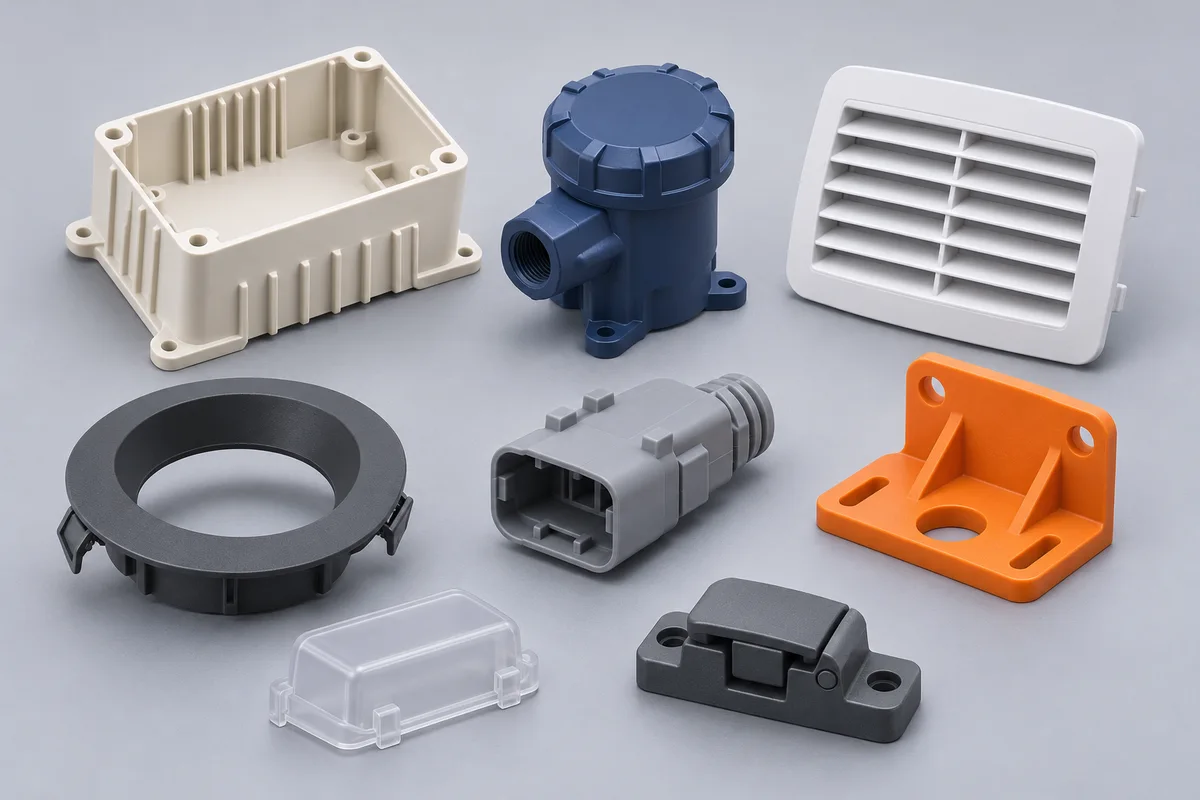
Choose a resin against the part requirements. Compare material families as a starting point, then confirm the exact grade, manufacturing route and validation needs.
On this pageJump to the information you need
Start with performance, then narrow the grade
ABS
Enclosures and general functional plastic parts
Review impact, temperature, appearance and the exact grade.PC / PC-ABS
Housings and components with specific impact or heat requirements
Transparency, electrical requirements and compatibility vary by grade.PP
Covers, containers and flexible features
Review stiffness, hinge geometry, shrinkage and chemical exposure.PE
Covers, protective and household components
Density and formulation affect stiffness, surface behavior and dimensional needs.PA / Nylon
Mechanical components and functional housings
Consider moisture conditioning, dimensions, reinforcement and operating temperature.POM / Acetal
Gears, sliding and precision-fit components
Review friction, loading, tolerance and the application environment.PMMA
Clear covers and appearance-focused parts
Specify optical, impact, surface and weather-exposure requirements.TPE / TPU
Flexible grips, cushioning and overmold features
Hardness, material compatibility and bonding depend on the grade and design.PS / PET / PVC
Other thermoplastic material discussions
Describe the application and exact material specification so suitability can be reviewed.Family descriptions are general planning information, not grade-specific property data or a guarantee of suitability. Final requirements should refer to the selected material's documentation.
What your material brief should cover
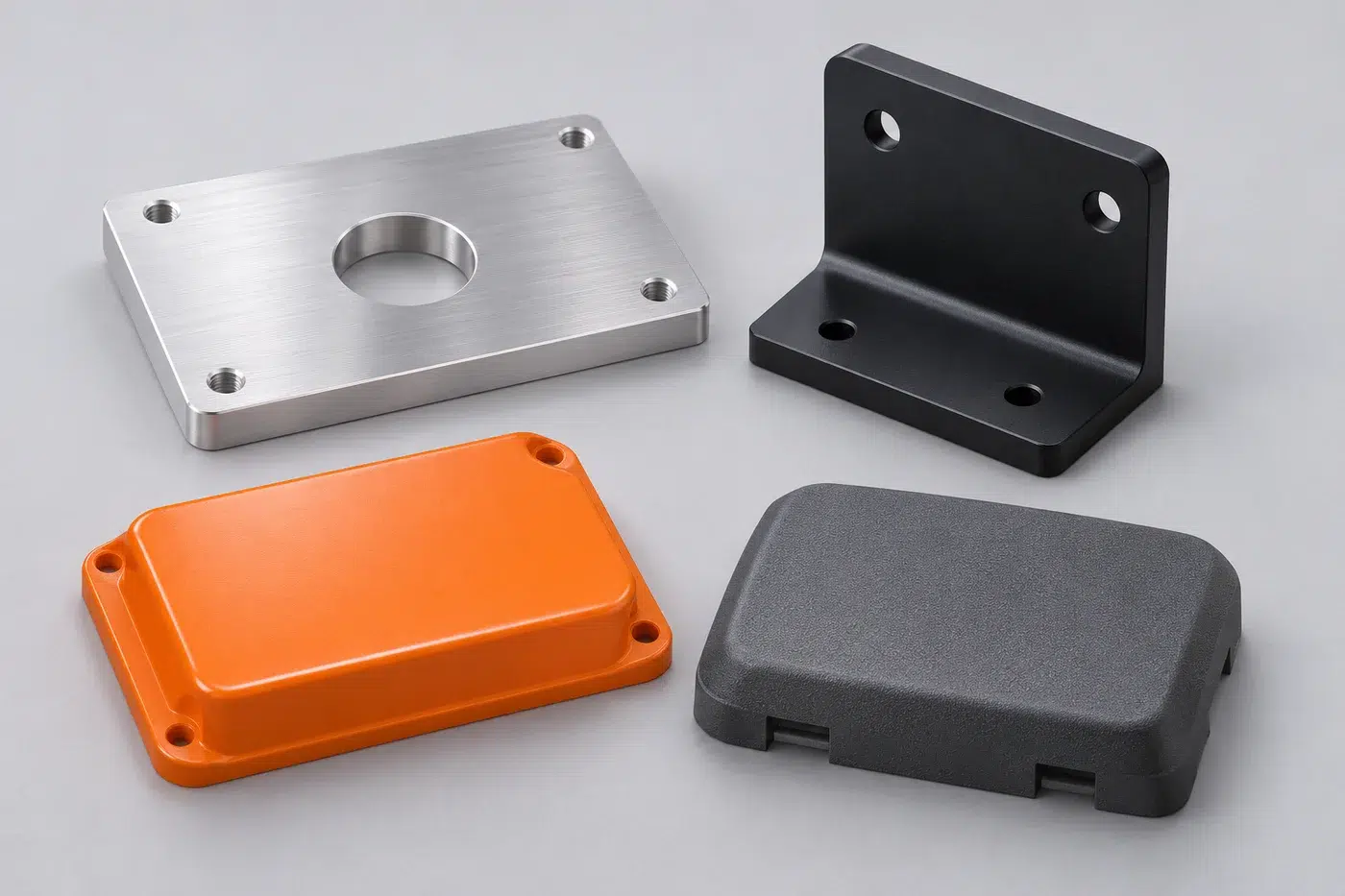
| Function | Loads, impact, stiffness, flexibility, wear and assembly fit. |
|---|---|
| Environment | Temperature, humidity, chemicals, UV and cleaning exposure. |
| Appearance | Color, transparency, gloss, texture and visible surfaces. |
| Special requirements | State any electrical, flame-related, food-contact or other requirements explicitly. |
| Manufacturing | Part geometry, wall thickness, shrinkage, tooling, finish and expected quantities. |
| Approval | Required grade, permitted alternatives, material documents and finished-part validation. |
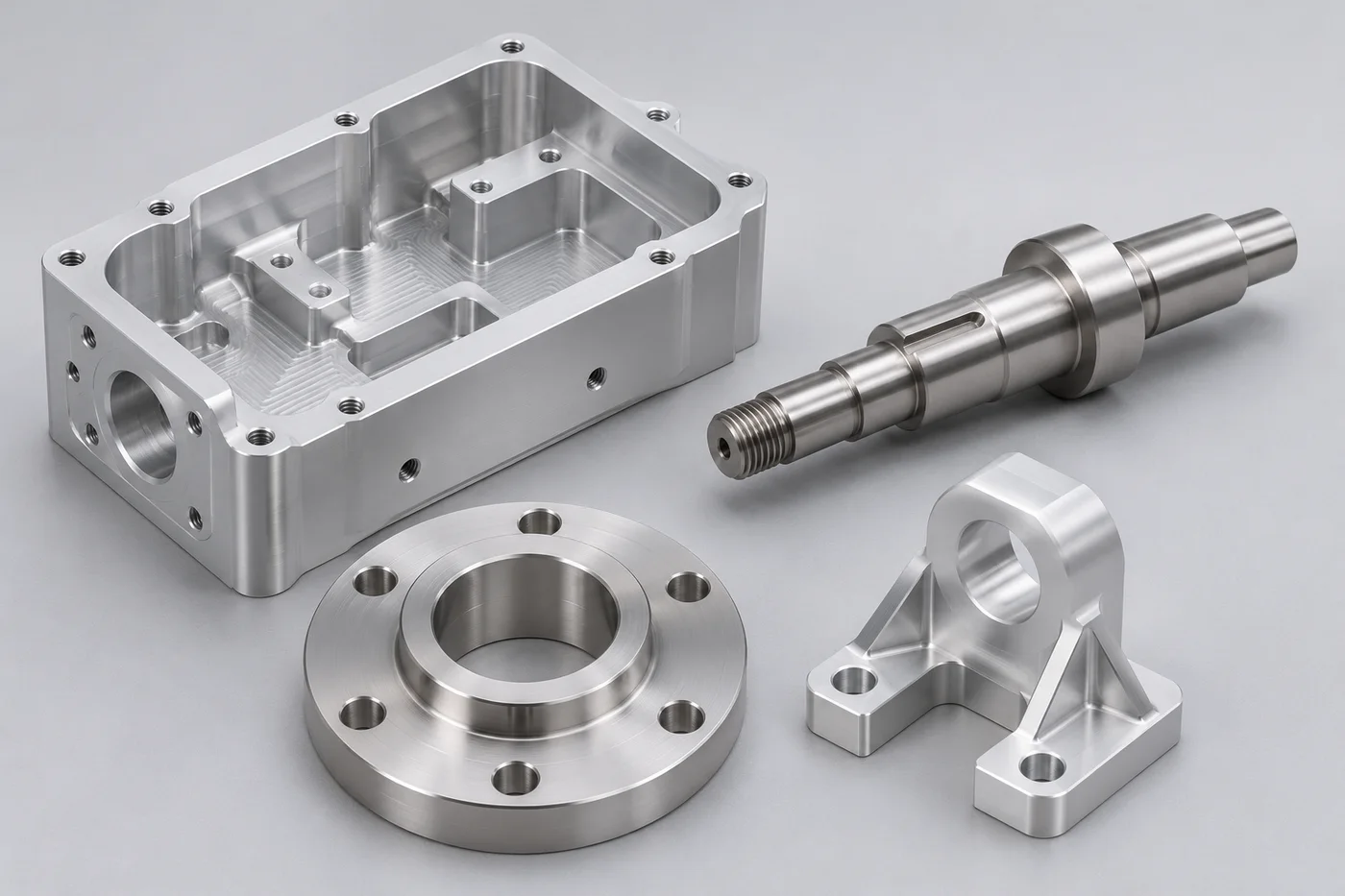
Define the alloy or machinable plastic
Aluminum, steel, stainless steel, brass, copper, titanium and machinable plastics are examples for material discussions. Feasibility depends on the grade, geometry, stock, finishing and inspection requirements.
Prepare the requirements before you start
Clear drawings and application requirements make the manufacturing review more useful.
Can you choose a material from the part application?
Share the operating conditions and required performance so candidate families and grades can be reviewed. Final suitability depends on the actual application and agreed validation.
Does a material name establish regulatory suitability?
No. Requirements depend on the exact grade, use, processing and finished component. Provide the applicable project specification and required documentation.
Review the material for your next part
Share your drawings, material, quantities and critical requirements with our team.