Low-Volume Injection Molding & Manufacturing
Move from an approved design toward a production quantity that fits your project. For low volume injection molding and small batch injection molding, BFY Mold reviews tooling investment, resin requirements and sample acceptance. Share your initial batch, anticipated repeat orders and design maturity so the manufacturing scope can be assessed before you commit.
CAD model · Material · Quantity · Critical requirements
On this pageJump to the information you need
Match the Manufacturing Route to Your Demand
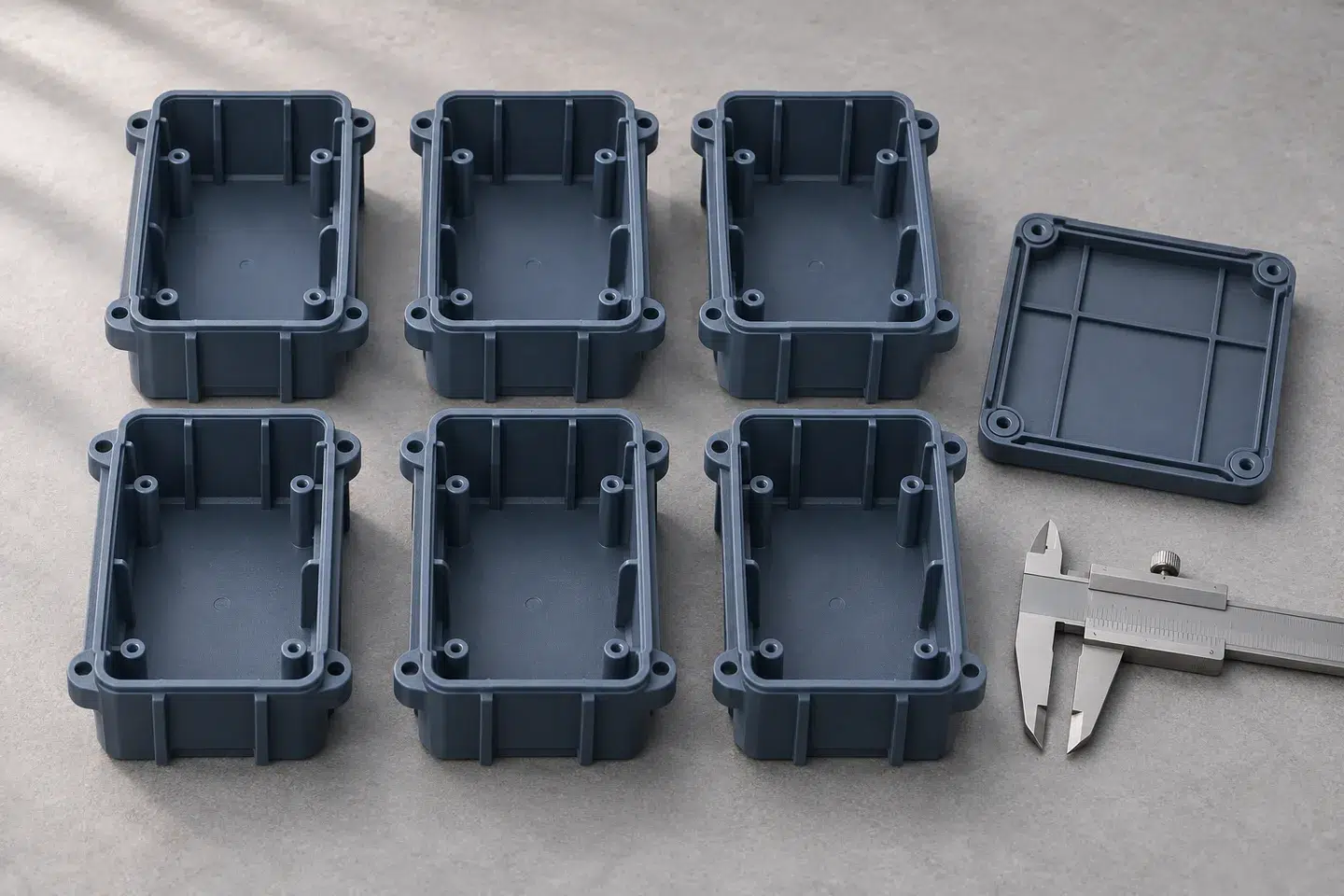
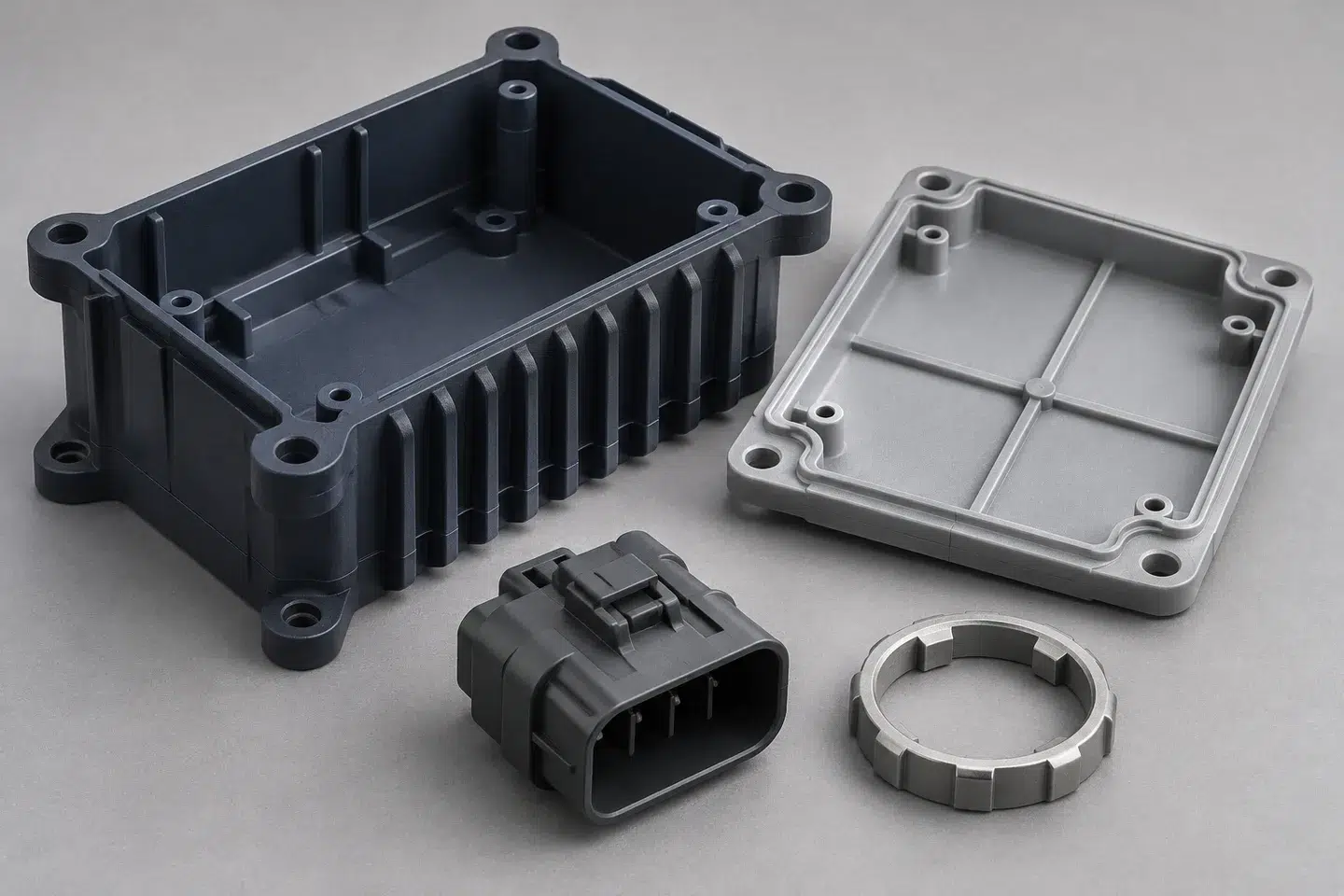
Low-volume injection molding uses a mold to produce a planned batch of plastic parts where demand or the development stage does not justify a large production commitment. The appropriate quantity depends on the part, resin, tool construction, inspection requirements and expected repeat orders. Compare total project cost, including tooling and sampling, rather than unit price alone. Where another manufacturing route is relevant, review it against the same functional and material requirements.
- Review the first order and likely repeat demand together
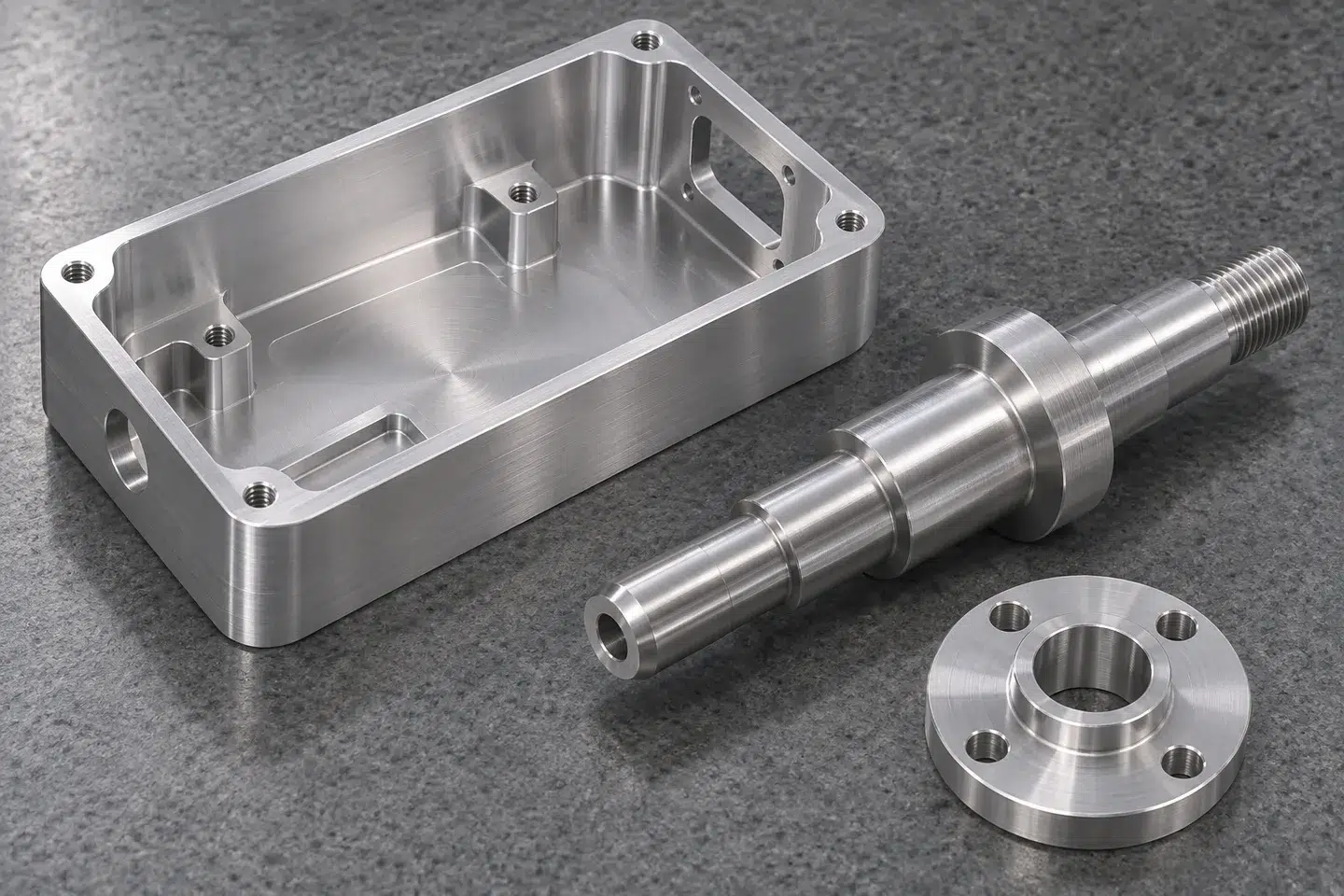
- Compare injection molding and CNC machining where appropriate
- Define which functional and cosmetic requirements must match production
Low-Volume Manufacturing: Specifications & Project Requirements
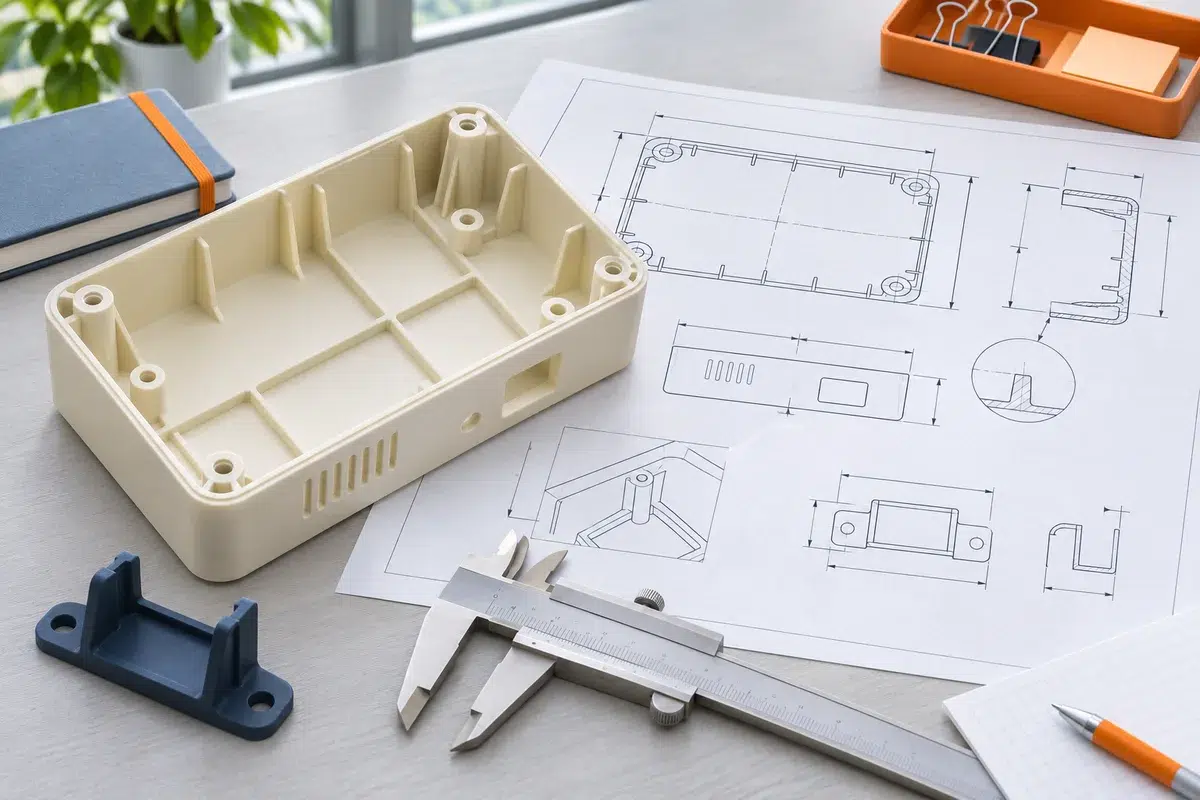
| Project stage | Evaluation parts, launch quantities or repeat small-batch demand |
|---|---|
| Process selection | Review molding or machining against geometry, material and quantity |
| Tooling decision | Compare initial tool cost with part cost and expected repeat orders |
| Materials | Specify the intended grade or performance requirements and whether substitutions are acceptable |
| Design readiness | Identify likely changes before committing to tooling |
| Delivery plan | Agree milestones for design review, samples and the production batch |
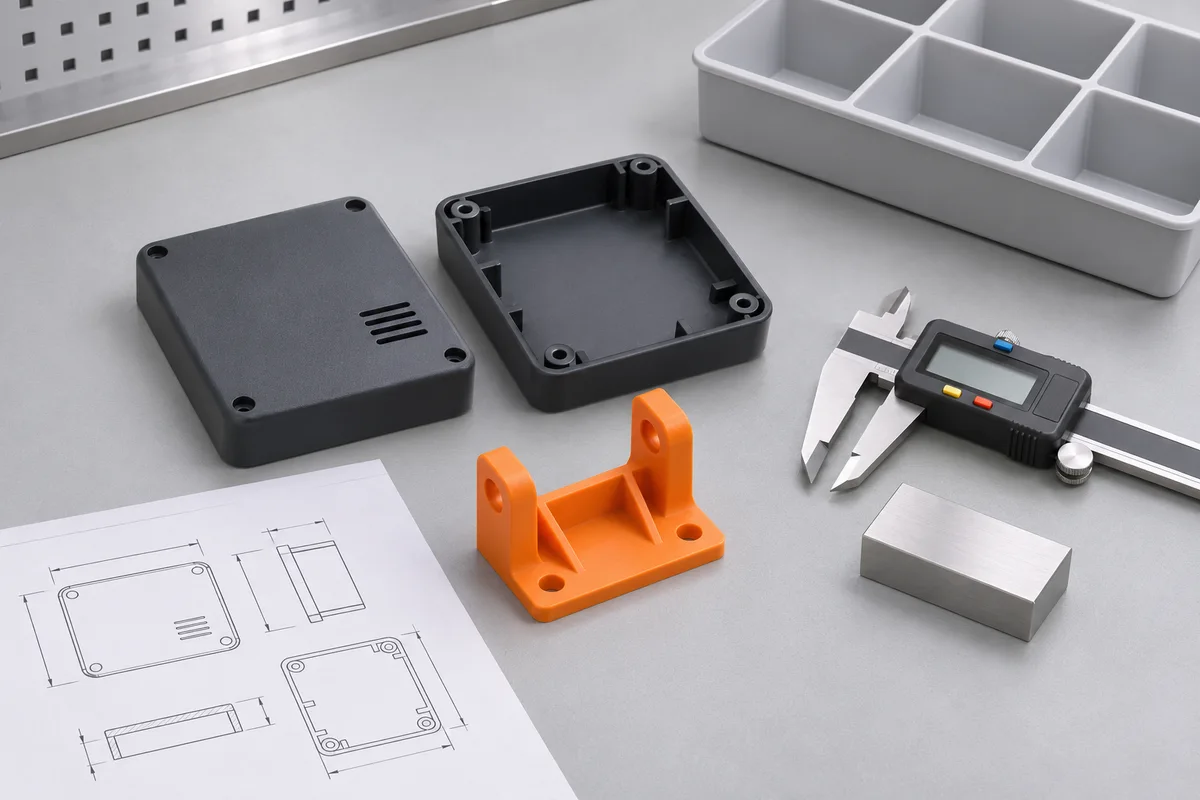
Final feasibility, tolerances, quantities and timing are confirmed after review of your drawings and requirements.
Balance Flexibility With Tooling Investment
A low initial quantity does not automatically make one process the lowest-cost option. Consider design stability, material requirements and future demand alongside the first batch.
Design Maturity
Identify features that may change after evaluation. Discuss how those changes affect tooling and future batches.
Quantity & Cost
Share both the first order and expected repeat quantities so total project cost can be compared.
Validation Needs
State which dimensions, materials, surfaces and assembly checks are necessary for the parts to serve their purpose.
Technical Review and Production Stages
Review the requirements at each stage, from engineering and tooling to samples, production checks and delivery.
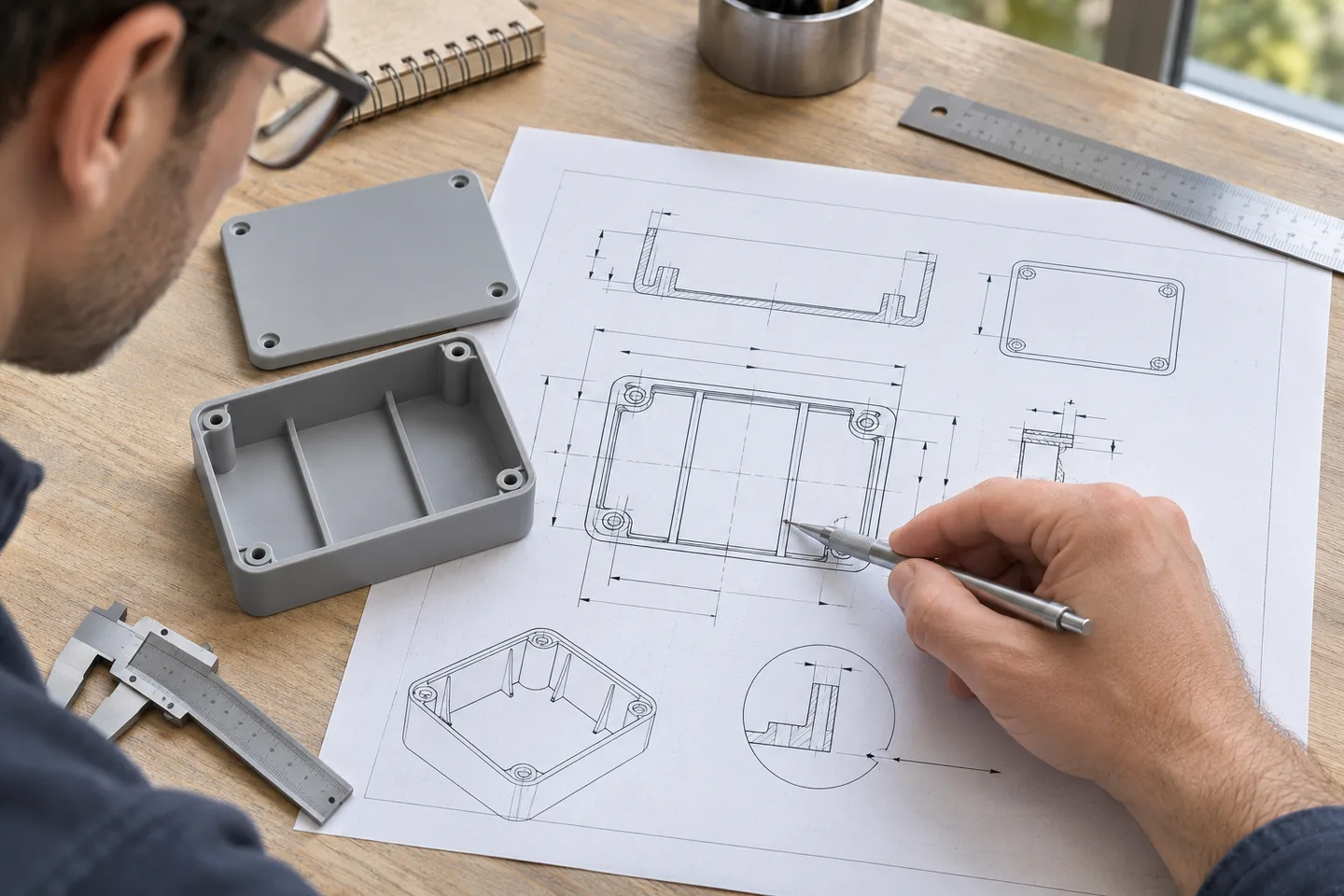
Review the Part Before Choosing the Process
- Project inputs3D CAD, drawing revision, mating components and visible surfaces.
- Review prioritiesPart geometry, assembly, material and expected production quantities.
- Agreed next stepClarify open requirements and confirm the quotation scope.
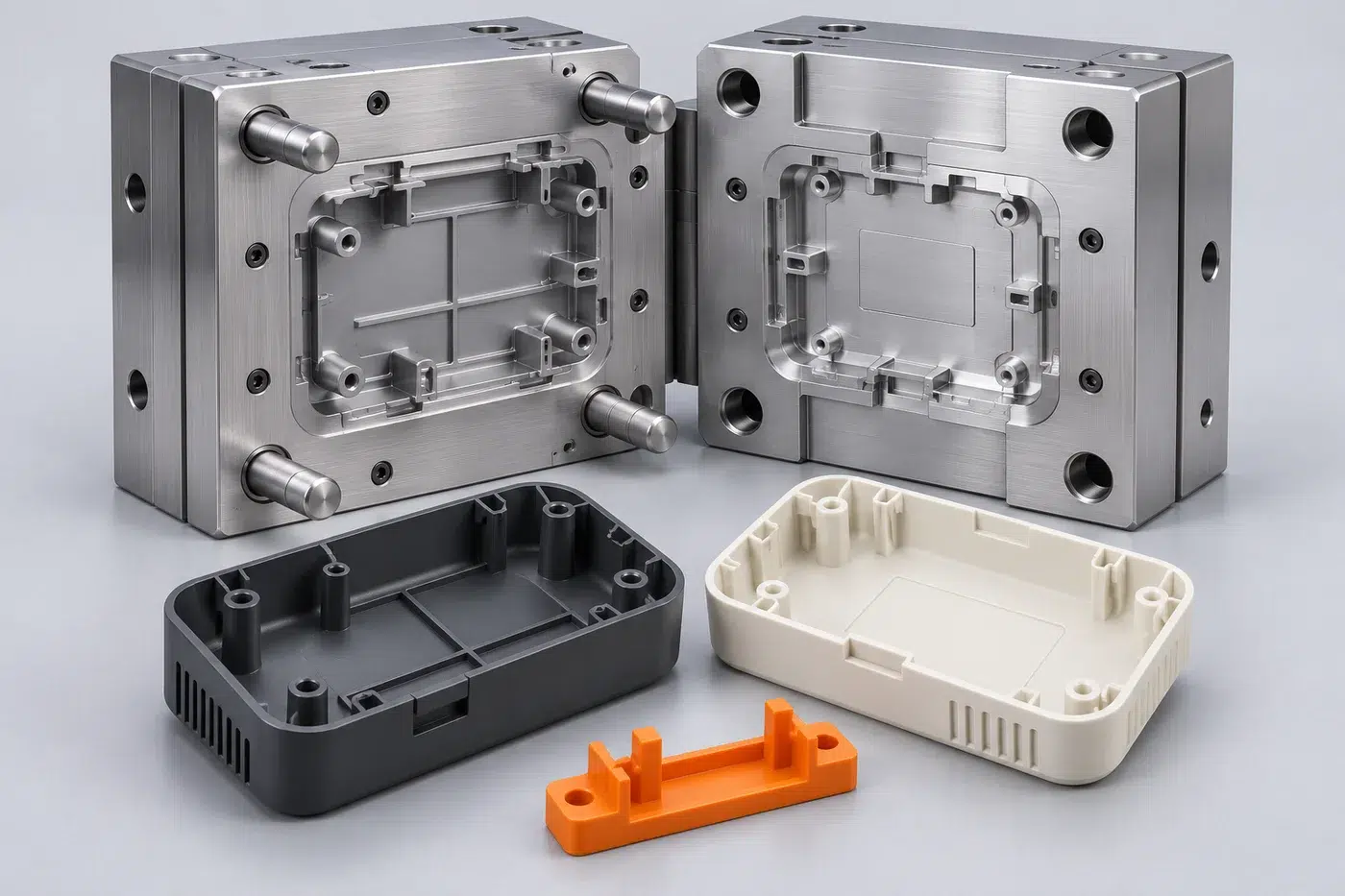
Connect Mold Design, Manufacturing and Trials
- Technical scopeReview cavity layout, parting lines, gates, cooling and ejection.
- Approval criteriaAgree drawing requirements, sample checks and the review process.
- Project planConfirm the work scope and milestones before manufacturing.

Manufacture Against the Agreed Specification
- Approved referenceConfirm the drawing revision, material and agreed sample or specification.
- Process requirementsIdentify critical features, appearance and the checks required for the project.
- Change controlDiscuss changes to the drawing, material or requirements before proceeding.
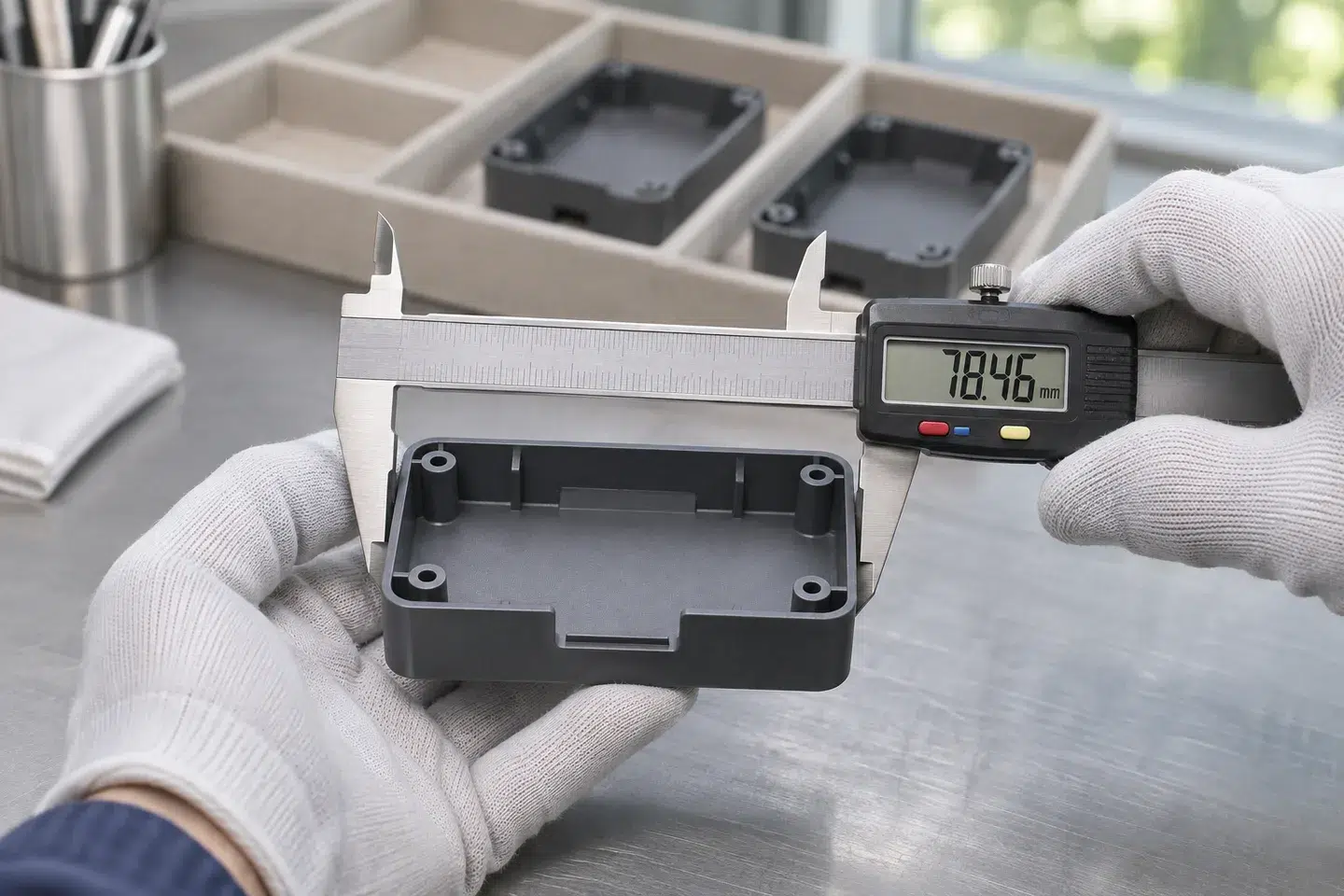
Keep Acceptance and Delivery Requirements Clear
- InspectionDefine the critical dimensions, appearance checks and required records.
- PackagingAgree protection, quantities and handling requirements for shipment.
- Repeat productionKeep drawing revisions and approved requirements clear for later orders.
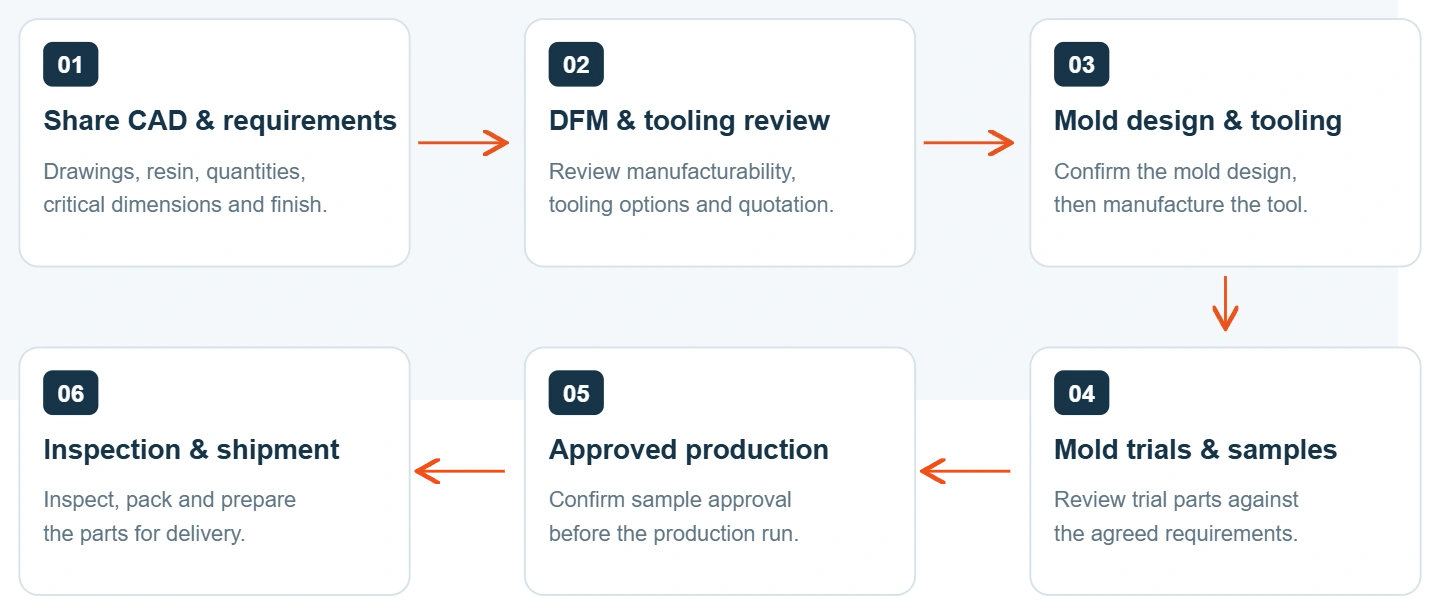
Connect Design, Tooling and Production
Agree requirements early, review tooling and samples, then confirm the approved production and inspection plan for your project.
Match the Manufacturing Plan to Your Batch
Initial Demand and Repeat Orders
Separate trial quantities, the first production batch and expected repeat demand. Explain whether the design is stable and identify likely revisions. These details help clarify the tooling investment and production scope.
Material and Functional Requirements
Specify the resin grade, critical dimensions, appearance and assembly conditions. A prototype made by a different process may not behave like an injection-molded part. Define what must be demonstrated by the trial samples.
Tooling Investment and Release
Review tool construction, sample approval, inspection records and the process for design changes. Agree the batch acceptance and repeat-order requirements before production. Any delivery commitment follows review of the actual project.
Plan Short Runs and Bridge Production
| Review item | Information to agree |
|---|---|
| Demand stages | Separate trial quantities, the first release and likely repeat orders. State whether demand or the design is still changing. |
| Tooling choice | Compare the proposed tool construction and modification options against expected use. A bridge-production plan should identify how later orders will be handled. |
| Process comparison | Compare molding with machining or other relevant routes using the same material, geometry, finish and functional requirements. |
| Cost and release | Review tooling, sampling, inspection and batch costs together. Quantities and delivery dates follow the agreed project scope. |
Project questions
Is bridge production a fixed quantity range?
No. It describes the role of an interim production plan. The suitable quantity and tooling depend on the part, development stage and expected demand.
Can the first batch use the final production resin?
Specify whether the exact resin grade is required for evaluation. A prototype made with another material or process may behave differently.
Low-Volume Injection Molding & Manufacturing FAQs
What quantity counts as low-volume injection molding?
There is no universal batch size. Geometry, resin, tool cost and inspection requirements affect the economics. Share your sample quantities, first batch and repeat demand so the project can be evaluated.
Is injection molding suitable for my small batch?
Compare tooling and sampling investment with material, function, appearance and anticipated repeat orders. A suitable route depends on the finished-part requirements; an initial DFM and tooling review helps identify open questions.
Can a low-volume project lead to repeat production?
Discuss repeat demand when the tool and acceptance plan are specified. Changes in quantity, resin or part design can affect the manufacturing approach. Confirm the approved drawing, material grade and samples for later orders.
How does low-volume injection molding differ from CNC machining?
Injection molding forms parts in a tool, while CNC machining removes material from stock. Tool investment, geometry, material behavior, finish and quantities influence the comparison. Review our CNC machining service where a machined route is relevant.
How are design changes handled after sampling?
Identify the proposed revision and review its effect on the tool, part function, cost and schedule. Agree the change scope and any further sample checks before proceeding; not every modification can be accommodated by the original tool.
What information is needed for a low-volume quote?
Provide CAD and drawings, resin and finish requirements, critical dimensions, sample quantities, the first batch and anticipated repeat orders. Use the form below or our project quotation page.
How to Request a Manufacturing Quote
Send your part data, agree the scope, then review the quotation and sample plan with our team.
Request a Quote →Share Your CAD Files
Provide a 3D model or dimensioned drawing, intended use, material and quantities.
Engineering & DFM Review
Review wall thickness, assembly features, tooling approach and open requirements.
Confirm the Quotation
Agree tooling and part pricing, specifications, quantities and target dates.
Tooling & Trial Samples
After approval, develop the tool and review trial parts against agreed criteria.
Approve Production
Approve samples and confirm the production specification before a repeat run.
Inspection & Delivery
Confirm inspection records, packing and shipping requirements for your order.

Plan a Low-Volume Project
Tell us the material, quantity, critical dimensions, finish and target schedule. Add your drawing or model so we can review the manufacturing requirements.
Attach PDF, JPG, PNG or ZIP files, up to 50 MB per file. Put STEP/STP, IGES or X_T CAD files in a ZIP archive. You can also email info@bfymold.com.