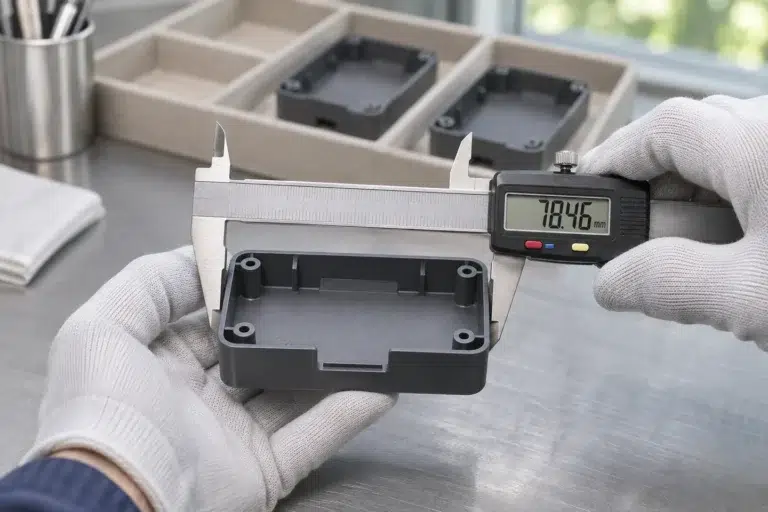
A tooling handover is more than moving a mold. A buyer needs a clear record of the tool, the agreed ownership and custody terms, the released design data, and the evidence used to accept the tool. This injection mold ownership and tooling handover checklist helps purchasing and engineering teams build that record before a project changes stage.
Use it to prepare questions and deliverables for your own agreement. It does not establish who owns a particular tool, resolve a contract dispute, or confirm that a mold can run at another facility. Those decisions require the relevant agreement, permissions and a tool-specific technical review.
Separate Ownership, Custody and Technical Acceptance
Record which parties are responsible for the mold, where it will be stored and used, and who can authorize changes or release. Keep these questions separate from whether trial samples meet the drawing. A sample acceptance report does not, by itself, describe rights to design files, spare components, maintenance records or future use.
Before approving tooling expenditure, identify the documents that govern ownership, payment milestones, storage, maintenance and release. List the relevant tool IDs and components. If terms are unclear or disputed, resolve them with the responsible commercial or legal advisers rather than assuming that an invoice or a supplier label answers every question.
Build a Tooling Handover Register
The following register is a buyer planning template, not a statement that every supplier provides each item. Agree the deliverables, format, access permissions and acceptance owner before the handover date.
| Record | What to agree | Evidence before release |
|---|---|---|
| Tool identity and scope | Mold ID, part numbers, cavity configuration, inserts and supplied accessories | An itemized register matched to tool markings and approved photographs |
| Commercial authority | Agreed ownership, custody, permitted use and who authorizes release | References to the applicable agreement and named decision owners |
| Released design data | Part CAD, drawings, tool drawings and revision status; editable formats only where agreed | A file index showing revision, format, access permission and unresolved differences |
| Bill of materials | Agreed component list, replaceable items and available spare-parts information | Parts list identifying specifications or supplier references needed for maintenance |
| Tool condition | Maintenance history, known wear, damage, open repairs and storage requirements | A condition report with dated observations and agreed actions |
| Trial and inspection | Resin grade, sample IDs, cavity coverage, drawing baseline and acceptance criteria | Traceable trial samples, measurement reports and an open-issue register |
| Machine interfaces | Mold envelope, mounting, ejection, nozzle and required utility interfaces | A compatibility review by the receiving technical team where a move is proposed |
| Release and custody | Approved destination, packing scope, inventory, responsibility and receipt checks | Authorized release record and a documented receipt inspection plan |
Use Four Review Gates Before Releasing a Tool
- Define the Agreed ScopeIdentify the tool and the governing documents. Assign commercial and engineering owners for open questions.
- Reconcile the Data PackageCheck that file revisions, component lists and supplied samples describe the same tool configuration.
- Review Condition and AcceptanceRecord tool condition, trial findings, accepted exceptions and checks that remain outstanding.
- Authorize and Record HandoverRelease only the agreed items and permitted data. Record custody, receipt checks and any further validation required.
Keep a sign-off record at each gate; passing one gate does not silently close the others.
Example: A Mounting Boss Changes After Sampling
Suppose a buyer changes a mounting boss after reviewing the first samples. This is an illustrative scenario, not a BFY customer case. The part drawing, affected mold inserts, sample report and file register may now refer to different revisions. A tool can be physically complete while its handover package is inconsistent.
Identify the proposed revision, affected surfaces and verification plan before authorizing work. Update the file register and retain the earlier baseline so the change remains traceable. Our injection mold modification checklist covers that review; the trial and sample approval checklist explains the evidence needed for the next release decision.
A Complete Package Does Not Prove Transfer Compatibility
If a mold may move between facilities, the receiving team should review its actual interfaces, utilities, condition, material requirements and proposed process. Historical settings and previously accepted samples provide context; they do not prove that a different machine or configuration will reproduce the same result. Agree what needs to be checked again.
Do not treat this guide as confirmation that BFY Mold offers a mold-transfer service or can accept an existing tool. A proposed transfer, repair or reuse needs separate capability and compatibility confirmation. For a new project, the injection mold making service and mold design and DFM review provide starting points for agreeing construction, documentation, trials and acceptance.
Tooling Ownership and Handover FAQs
Does paying for a mold automatically define every ownership right?
Do not infer the complete scope from payment alone. Check the applicable agreement for the specific tool, data, use, custody and release terms, and resolve ambiguity with the responsible advisers.
Should every handover include editable mold CAD?
Specify the required formats, permissions and deliverables in advance. Tool drawings, editable design files and part models are different deliverables; do not assume they are interchangeable or automatically included.
Is sample approval the same as tool acceptance?
Keep the decisions explicit. Sample approval concerns the defined part and trial evidence; tool acceptance may also include condition, construction, documentation and other agreed deliverables.
What if a component or file is missing?
Record the gap, its effect on use or maintenance, the responsible owner and the required action. Document whether it prevents release or falls within a specifically accepted exception.
Prepare a Clear Tooling Brief
For a new tooling project, share the part files, material, expected quantities, critical features and required acceptance records. Identify documentation and handover needs before the quotation scope is agreed.