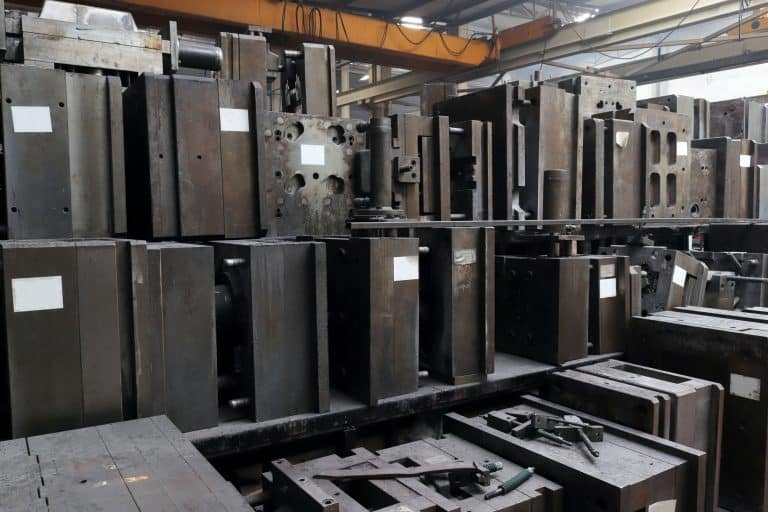
The most critical asset in the plastic injection molding process isn’t the plastic resin or even the injection machine—it is the mold itself. Tooling represents a significant upfront capital investment, and the type of mould steel you choose will directly dictate the mold’s lifespan, the quality of your plastic parts, and your overall Return on Investment (ROI).
Select a steel that is too soft, and your mold will wear out before production is finished. Select a steel that is unnecessarily hard, and you will overpay for tooling and extend your lead times.
In this comprehensive guide, we will compare the three most common injection mould steels in the industry—P20, H13, and S136—and help you determine the most cost-effective solution for your next manufacturing project.
Why Your Choice of Mould Steel Matters
The steel used to machine your injection mold cavity and core affects several crucial aspects of production:
- Tool Life (Longevity): Harder steels can withstand millions of injection cycles without losing dimensional accuracy.
- Part Quality & Surface Finish: Certain steels can be polished to a mirror finish, which is essential for optical parts or high-gloss consumer products.
- Cycle Time: High-quality steels with proper cooling channel designs dissipate heat faster, reducing the time it takes for the plastic part to cool and be ejected.
- Corrosion & Wear Resistance: Abrasive resins (like glass-filled nylon) or corrosive resins (like PVC) will quickly destroy standard steel, requiring specialized grades.
The Big Three: P20 vs. H13 vs. S136
1. P20 Steel: The Industry Workhorse
P20 is a pre-hardened, low-alloy tool steel. It is the most commonly used material for general-purpose injection molds.
- Hardness: Typically supplied pre-hardened to 28-32 HRC (Rockwell Hardness).
- Pros: Because it is relatively soft, P20 is easy and fast to machine. It doesn’t require post-machining heat treatment, which keeps tooling costs low and lead times short.
- Best For: Medium-volume production runs (up to 300,000 – 500,000 shots). It is ideal for standard, non-abrasive plastics like ABS, PP, PC, and PE.
2. H13 Steel: The High-Volume Champion
H13 is a versatile chromium-molybdenum hot work tool steel. It is designed to withstand extreme thermal fatigue and mechanical stress.
- Hardness: It is machined in a softer state and then vacuum heat-treated to achieve a hardness of 48-52 HRC.
- Pros: Exceptional wear resistance and toughness. It will not deform under high injection pressures and can run reliably for over 1 million shots (SPI Class 101 mold).
- Best For: High-volume mass production. It is the go-to choice if you are molding abrasive materials, such as fiberglass-reinforced plastics (e.g., PA66+GF30).
3. S136 Steel: The Master of Polish and Purity
S136 is a premium martensitic stainless tool steel. It is renowned for its exceptional purity and resistance to rust.
- Hardness: Typically heat-treated to 48-52 HRC.
- Pros: Its rust-proof nature means cooling channels won’t corrode over time, ensuring consistent cooling efficiency. More importantly, S136 has a highly uniform microstructure, allowing it to be polished to a flawless, optical-grade mirror finish (SPI A-1 or A-2).
- Best For: Optical components (lenses, light guides), medical devices, clear plastics (PMMA, clear PC), and corrosive resins like PVC or POM.
B2B Engineering Data: Mould Steel Comparison Chart
| Steel Grade | Hardness (HRC) | Machinability | Expected Tool Life (Shots) | Best Used For / Typical Resins |
| P20 | 28 – 32 | Excellent (Low Cost) | 100,000 – 500,000 | General purpose housings (ABS, PP, PS) |
| H13 | 48 – 52 | Fair (Requires Heat Treat) | 1,000,000+ | Abrasive resins, Glass-filled plastics, High volume |
| S136 | 48 – 52 | Good (Stainless) | 1,000,000+ | Medical, Optical parts, Clear PC/PMMA, Corrosive resins |
| Aluminum (7075) | ~150 HB | Very Fast (Cheapest) | 1,000 – 10,000 | Rapid prototyping, Low-volume runs |
3 Key Factors When Choosing Your Tooling Steel
If you are unsure which steel to request for your next RFQ (Request for Quote), consider these three variables:
- What is your Total Production Volume? If you only need 50,000 parts to test the market, paying a premium for an H13 steel mold is a waste of money. P20 (or even Aluminum) is sufficient. If you plan to sell 2 million units over 3 years, H13 is mandatory to prevent downtime for mold repairs.
- Does your plastic contain additives? Glass fibers, carbon fibers, and flame retardants are highly abrasive. They act like sandpaper as they flow through the mold. If your resin has a high glass-fill percentage, you must use hardened steel like H13 to prevent premature wear at the gates and runners.
- What surface finish do you require? If you need a high-gloss finish or absolute transparency, you cannot use P20. You must specify a high-grade stainless steel like S136 or NAK80.
Trust BFY Mold for Precision Tooling
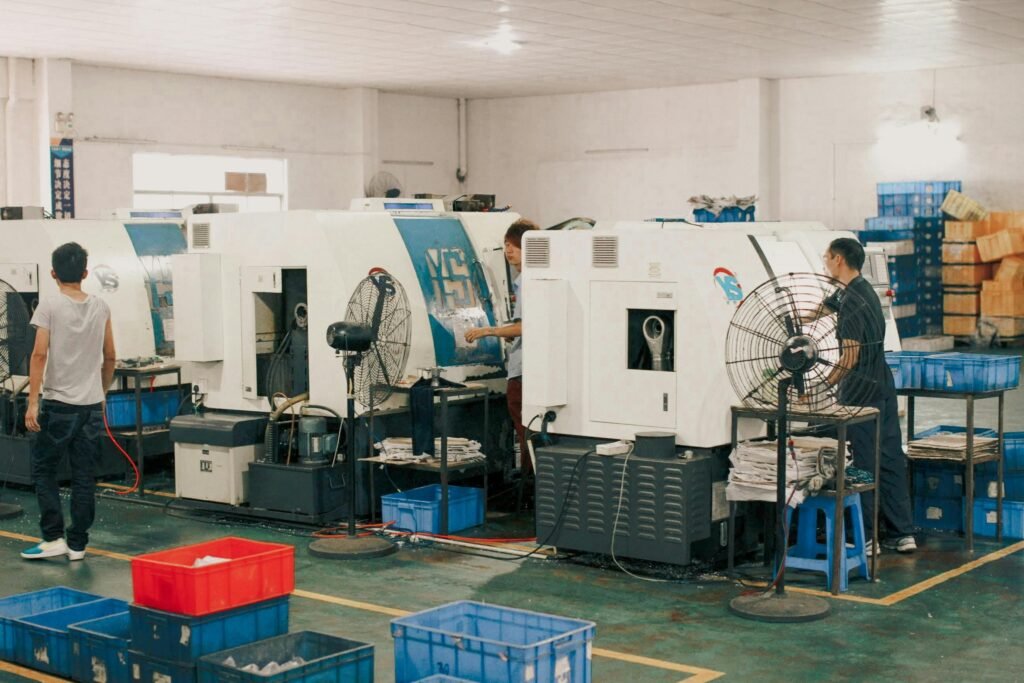
Making the right tooling decision requires balancing upfront costs with long-term manufacturing efficiency. At BFY Mold, we don’t just inject plastic—we are master toolmakers with over 20 years of experience in custom mold manufacturing.
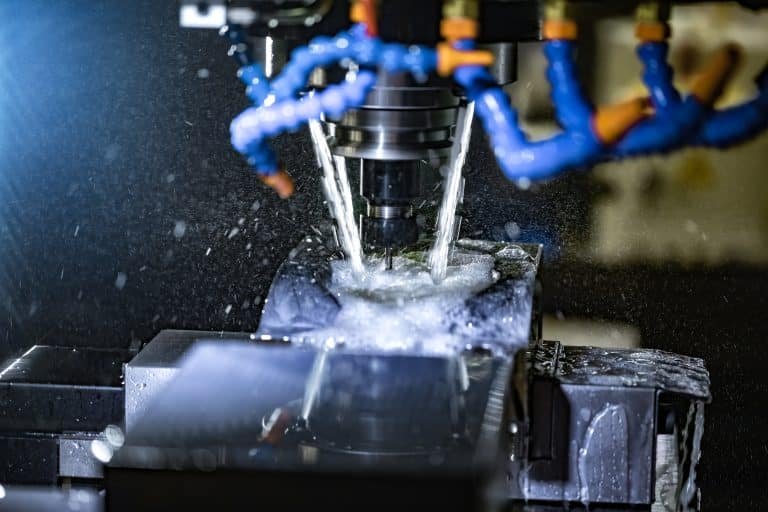
- In-House Tooling Capabilities: We manufacture everything in-house using high-end 5-axis CNC and EDM machines, ensuring tight tolerances down to ±0.005mm.
- Transparent Steel Sourcing: We only use authentic, certified mould steel (such as LKM standard bases and genuine ASSAB/Schmolz+Bickenbach steel inserts) to guarantee tool life.
- Custom Solutions: From cheap and fast Aluminum prototype molds to SPI Class 101 hardened H13 production molds, we tailor the tooling to fit your exact budget and volume.
Frequently Asked Questions (FAQ)
Q1: What is the difference between P20 and 718H steel?
718H is essentially an upgraded version of P20. It has a slightly higher alloy content (Nickel) and is pre-hardened to a slightly higher degree (33-38 HRC). It offers better polishability and longer tool life than standard P20, making it a popular mid-tier option.
Q2: How much does a steel injection mold cost?
The cost varies wildly based on part size, complexity (undercuts, sliders), and the steel chosen. A simple P20 mold for a small part might cost $3,000 to $5,000, while a complex, multi-cavity H13 hardened mold can cost $15,000 to $50,000+.
Q3: Can a damaged steel mold be repaired?
Yes. If a steel mold is scratched, worn, or needs a design change, the steel can often be repaired using laser welding or TIG welding. The area is welded with matching filler wire and then CNC machined or EDM’d back to its original dimensions.
Start Your Mold Making Journey
Are you ready to turn your CAD designs into physical, mass-produced reality? Let our tooling experts guide you.
[Get a Free Tooling Quote Today] – Upload your 3D models, specify your expected production volume, and the BFY Mold engineering team will recommend the perfect mould steel strategy for your project within 24 hours.