When designing flexible, grip-friendly, or impact-resistant plastic parts, engineers are often faced with a dizzying array of material choices. Among them, TPR (Thermoplastic Rubber) stands out as one of the most versatile and cost-effective solutions in the manufacturing world.
But what is TPR material exactly, and how does it perform during the injection molding process?
In this comprehensive guide, we will break down the fundamental properties of Thermoplastic Rubber, explore its common industrial applications, and provide expert processing guidelines for your next injection molding project.
What Exactly is Thermoplastic Rubber (TPR)?
Thermoplastic Rubber (TPR) is a semi-crystalline material that blends the elastic properties of rubber with the easy processability of thermoplastics. It is essentially a physical mix of polymers (usually a plastic and a rubber) that melt when heated and solidify when cooled, without undergoing the irreversible chemical cross-linking (vulcanization) that traditional thermoset rubbers require.
This unique molecular structure gives TPR its rubber-like feel, excellent slip resistance, and high shock absorption, while allowing it to be processed on standard plastic injection molding machines.
TPR vs. TPE: Is There a Difference?
In the manufacturing industry, the terms TPR and TPE (Thermoplastic Elastomer) are often used interchangeably. However, strictly speaking, TPR is a subset of the broader TPE family. TPR is typically based on SBS (Styrene-Butadiene-Styrene) block copolymers, making it highly suitable for applications requiring high friction and a matte rubbery finish.
Key Properties of TPR Material
Understanding the physical properties of TPR is crucial for effective product design. Below is a breakdown of its core characteristics:
B2B Engineering Data: TPR Material Properties
| Property | Typical Value / Description | Advantages for Product Design |
| Hardness Range | 0 to 100 Shore A | Extremely customizable; can be as soft as a gel or as hard as a shoe sole. |
| Elasticity & Rebound | High | Excellent shock absorption and vibration dampening. |
| Temperature Resistance | -30°C to 70°C (typical) | Performs well in standard indoor and outdoor environments. |
| Chemical Resistance | Moderate | Good resistance to water and mild chemicals; sensitive to strong solvents and oils. |
| Recyclability | 100% Recyclable | Eco-friendly; sprues and runners can be reground and reused, reducing waste. |
TPR Injection Molding: Processing Guidelines
Because TPR behaves like a thermoplastic, it is highly efficient for mass production. However, to achieve a flawless surface finish and dimensional stability, engineers must carefully control the injection molding parameters.
1. Drying Requirements
While TPR is generally not highly hygroscopic (water-absorbing), it is strongly recommended to dry the material if it has been stored in a humid environment or if it contains fillers. Drying at 60°C to 80°C for 1 to 2 hours prevents moisture-induced defects like splay marks or bubbles on the part’s surface.
2. Temperature Settings
- Melt Temperature: Usually ranges between 160°C and 200°C. Exceeding 220°C can cause the material to degrade and discolor.
- Mold Temperature: Keep the mold between 20°C and 40°C. A cooler mold significantly reduces cycle times since TPR solidifies quickly.
3. Shrinkage and Tolerances
TPR has a relatively high and variable shrinkage rate, typically ranging from 1.5% to 3.0%, depending on the exact grade and part geometry. To ensure precision, your injection molding partner must account for this during the mold design phase (DFM).
The Power of Overmolding with TPR
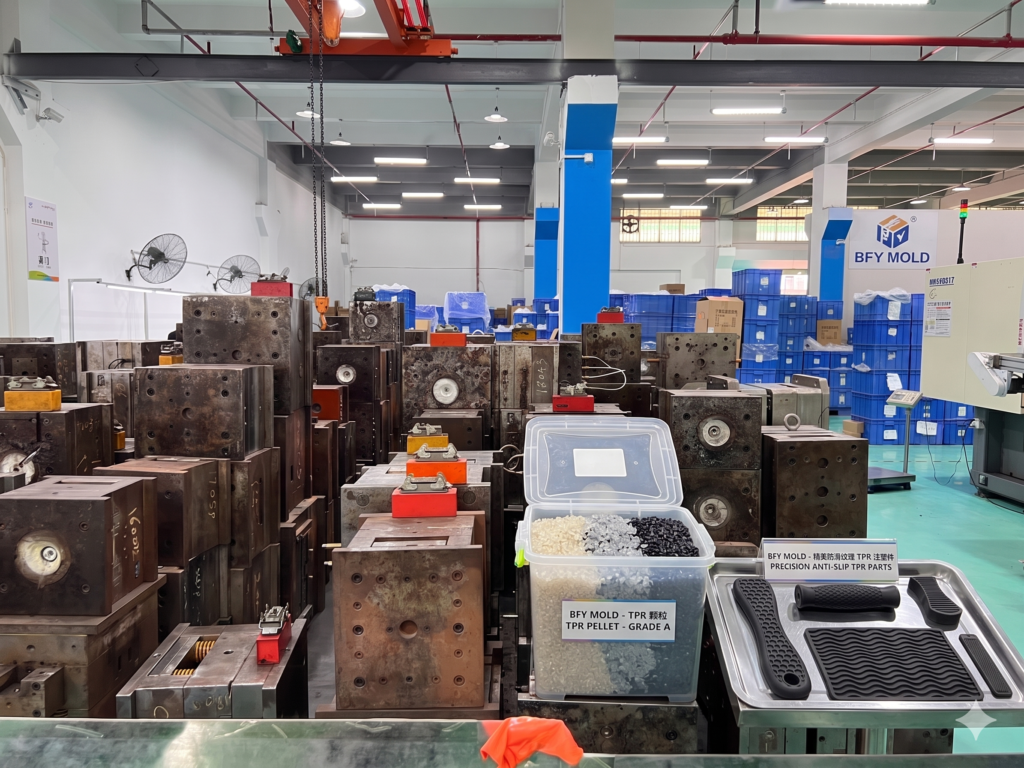
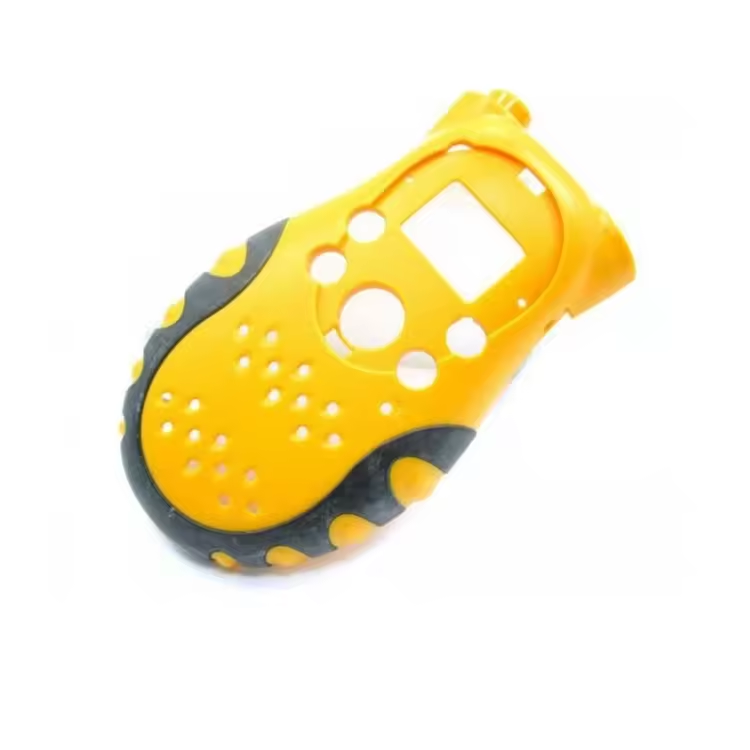
One of the greatest advantages of TPR is its ability to be overmolded (co-injected or dual-shot molded) onto rigid plastics like ABS, PC, or PP.
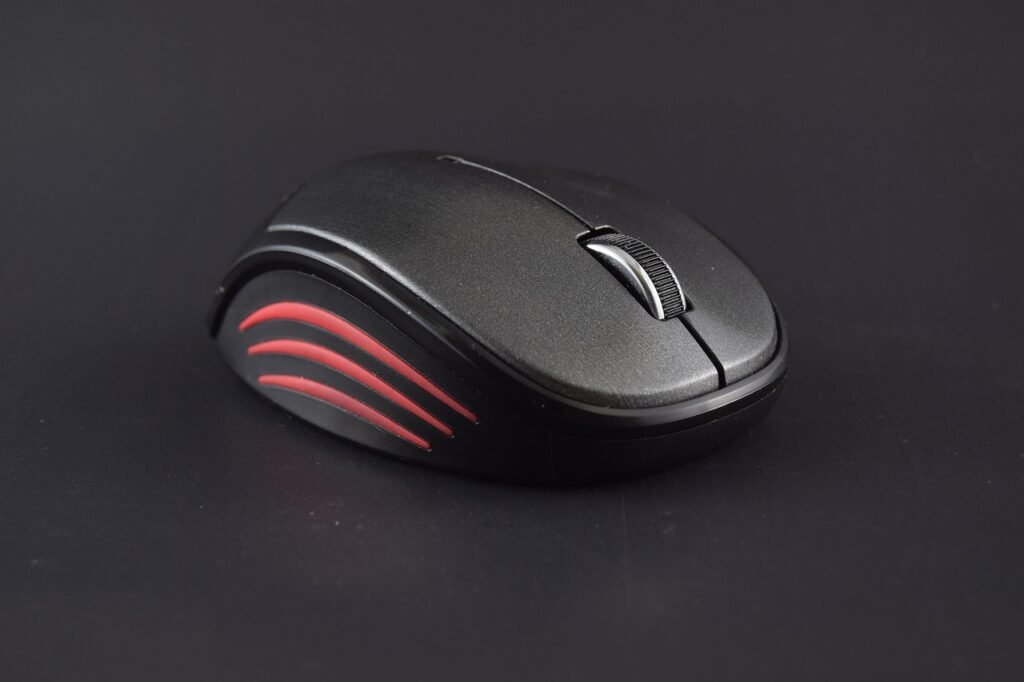
Instead of using adhesives or mechanical fasteners, TPR chemically bonds to the rigid substrate during the molding process. This is exactly how power tools, toothbrush grips, and waterproof seals are manufactured. Overmolding not only improves the ergonomics of a product but also reduces assembly steps and overall manufacturing costs.
Common Applications of TPR
Thanks to its versatility, TPR is utilized across a wide spectrum of industries:
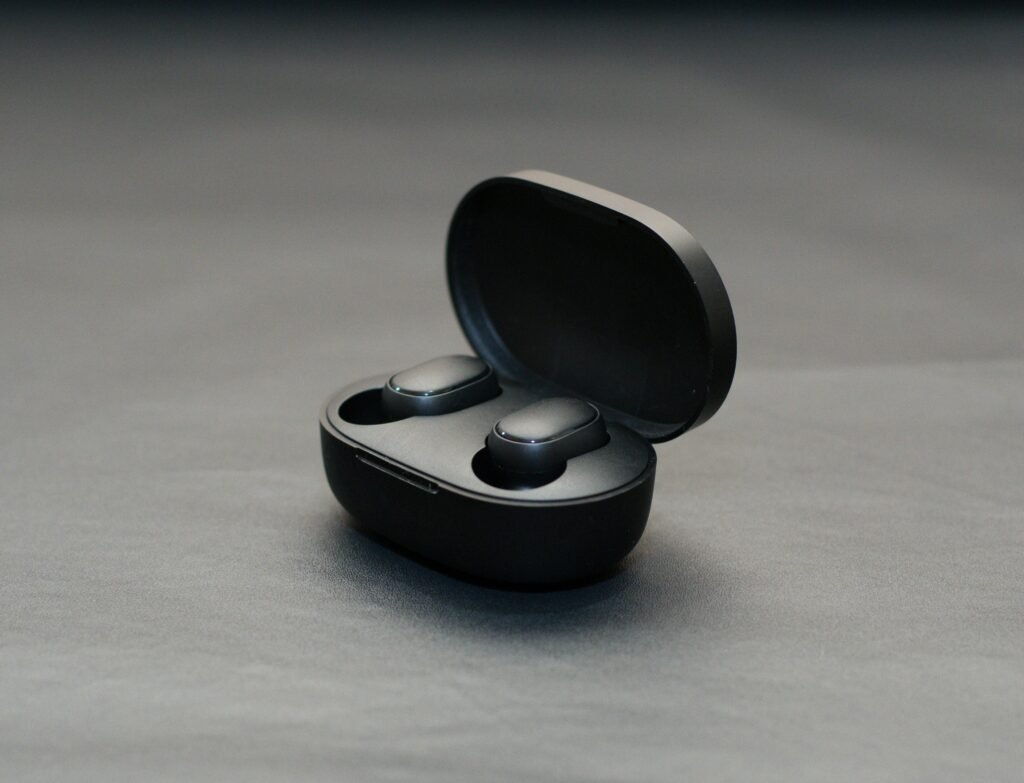
- Consumer Electronics: Protective phone cases, smart watch bands, and earbud tips.
- Hand Tools & Hardware: Ergonomic, non-slip grips for drills, screwdrivers, and garden tools.
- Automotive: Weather stripping, anti-rattle pads, and custom floor mats.
- Toys & Sports Equipment: Bicycle grips, pet toys, and flexible joint components.
Why Choose BFY Mold for Your TPR Projects?
Successfully molding flexible materials requires deep expertise in tool design, gating, and venting to prevent common defects like short shots or flash.
At BFY Mold, we bring over 20 years of custom plastic injection molding experience to your project.
- Overmolding Expertise: We specialize in complex 2K (two-shot) molding and overmolding, seamlessly bonding TPR to rigid substrates.
- High-Precision Tooling: Our in-house mold-making facility ensures tight tolerances (up to ±0.05mm), even for high-shrinkage materials like TPR.
- Material Selection: Not sure if TPR, TPU, or Silicone is right for your project? Our engineering team provides free DFM analysis and material consultation to guarantee the best performance at the lowest cost.
Frequently Asked Questions (FAQ)
Q1: Is TPR material toxic?
No, standard TPR is non-toxic, eco-friendly, and free from heavy metals and plasticizers (like phthalates). However, for applications requiring direct skin or food contact, you must specify medical-grade or FDA-compliant TPR materials.
Q2: What is the main difference between TPR and Silicone?
While both are flexible, TPR is a thermoplastic that can be melted and reshaped, making it much faster and cheaper to injection mold. Silicone is a thermoset rubber that requires a chemical curing process (Liquid Silicone Rubber molding) but offers far superior heat resistance (up to 250°C+).
Q3: Can TPR be glued?
Gluing TPR can be challenging due to its chemical resistance and low surface energy. For permanent bonding to other plastics, injection overmolding is always the most robust and cost-effective manufacturing solution.
Bring Your Flexible Designs to Life
Ready to start your next manufacturing project? Whether you need standard TPR injection molding or complex overmolding solutions, BFY Mold is here to deliver high-quality parts on time.
[Request a Free Quote Today] – Our engineers will review your 3D CAD files and provide a detailed DFM report within 24 hours.