When mechanical engineers need to replace heavy metal components with lightweight, high-strength plastics, they almost always turn to the Polyamide (PA) family—commonly known as Nylon.
Renowned for their exceptional toughness, low coefficient of friction, and outstanding chemical resistance, nylons are the backbone of modern automotive and industrial manufacturing. However, not all nylons are created equal. When specifying material for a high-stress gear, a bearing, or a high-temperature engine component, engineers are frequently forced to choose between the two undisputed heavyweights: Nylon 6 (PA6) and Nylon 66 (PA66).
Choosing the wrong grade can lead to premature mechanical failure, dimensional warping due to moisture absorption, or unnecessarily high material costs. In this advanced material selection guide, we will break down the exact chemical and mechanical differences between Nylon 6 and Nylon 66, and provide critical Design for Manufacturing (DFM) tips for your next injection molding project.
The Chemistry: Why Do The Numbers Matter?
The numbers “6” and “66” refer to the number of carbon atoms in the polymer’s chemical structure.
- Nylon 6 (PA6): Synthesized from a single monomer (caprolactam) which has 6 carbon atoms.
- Nylon 66 (PA66): Synthesized from two monomers (adipic acid and hexamethylenediamine), each containing 6 carbon atoms.
This slight difference in molecular structure radically changes how the polymer chains align and crystallize during the injection molding process, leading to distinct mechanical properties.

Nylon 6 (PA6): The Tough and Versatile Workhorse
Nylon 6 is a highly versatile, semi-crystalline thermoplastic. Because it crystallizes slightly slower than PA66, it is generally easier to injection mold and yields a superior cosmetic surface finish.
Key Advantages of Nylon 6:
- Superior Impact Strength: It has better impact resistance and toughness than PA66, especially in cold environments.
- Excellent Surface Finish: It flows well in the mold, resulting in a smooth, glossy surface even when glass fillers are added.
- Cost-Effective: Typically, PA6 is slightly less expensive than PA66.
The Weakness: PA6 has a higher moisture absorption rate than PA66. When it absorbs water from the environment, it acts as a plasticizer—making the part tougher, but causing it to swell dimensionally and lose some tensile strength.
Nylon 66 (PA66): The High-Heat, High-Rigidity Champion
Nylon 66 has a tighter, more highly ordered crystalline structure. This makes it stiffer, stronger, and more resistant to extreme heat than Nylon 6.
Key Advantages of Nylon 66:
- Higher Melting Point: PA66 melts at roughly 260°C (compared to 220°C for PA6), allowing it to survive in high-temperature environments like under-the-hood automotive applications.
- Superior Stiffness and Tensile Strength: It holds its shape better under heavy mechanical loads.
- Excellent Wear Resistance: The go-to choice for moving mechanical parts like gears, bushings, and rollers that require low friction.
The Weakness: PA66 is more brittle than PA6. It also requires highly precise thermodynamic control during injection molding, as its processing window is narrower.
B2B Engineering Data: PA6 vs. PA66 Comparison
| Property / Feature | Nylon 6 (PA6) | Nylon 66 (PA66) |
| Melting Point | 220°C (428°F) | 260°C (500°F) |
| Tensile Strength (Dry) | ~ 80 MPa | ~ 85 MPa |
| Impact Resistance | Higher (Better drop test survival) | Lower (Slightly more brittle) |
| Moisture Absorption (24 hrs) | ~ 1.8% | ~ 1.2% (Better dimensional stability) |
| Surface Finish | Excellent | Good (Can show glass fibers) |
| Typical Applications | Consumer goods, power tool housings, living hinges | Automotive gears, bearings, high-temp insulators |
The Game Changer: Glass-Filled Nylon (PA66+GF30)
In its pure, unfilled state, nylon is strong. But when you compound it with 30% Glass Fibers (GF30), it becomes an absolute structural powerhouse. PA66+GF30 boasts a tensile strength that rivals some cast metals, making it the ultimate material for metal replacement projects.
However, molding glass-filled nylon introduces two massive DFM challenges:
1. Anisotropic Shrinkage (Warpage)
Glass fibers do not shrink. As the molten nylon flows into the mold, the glass fibers align themselves in the direction of the flow. When the part cools, the plastic shrinks across the flow direction much more than it does along the flow direction. This differential shrinkage causes severe warpage.
- The Fix: At BFY Mold, our engineers use advanced Moldflow analysis to optimize gate locations, ensuring the glass fibers align symmetrically to keep your part perfectly flat.
2. Extreme Tooling Wear
Injecting 30% glass fibers at high pressure is like sandblasting the inside of your mold. Standard P20 tool steel will be destroyed in a matter of weeks, leading to flash and ruined tolerances.
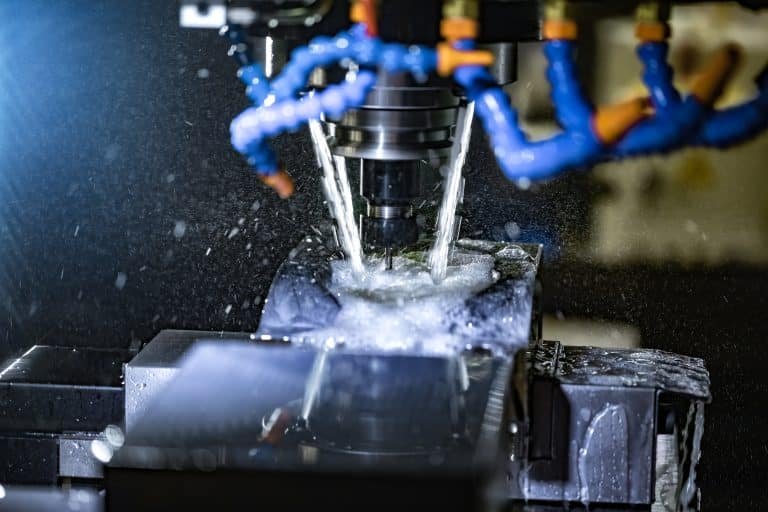
- The Fix: If you are running glass-filled nylon, your mold must be CNC machined from hardened tool steel. As detailed in our [Injection Mould Steel Guide], we utilize SPI Class 101 hardened H13 steel (48-52 HRC) to withstand the abrasive nature of GF nylons for millions of cycles.
Troubleshooting: The Moisture Problem
The number one reason nylon injection molding fails on the factory floor is moisture. Both PA6 and PA66 are highly hygroscopic.
If the raw pellets are not dried correctly, the trapped water boils into steam inside the injection barrel. This causes “splay” (silver streaks) on the part surface and severely degrades the polymer chains, resulting in parts that shatter easily under stress.
- Our Standard: BFY Mold strictly utilizes centralized desiccant drying systems, holding nylon resins at 80°C for 4 to 6 hours before molding to achieve a moisture content of less than 0.2%.
Precision Nylon Molding with BFY Mold
Whether you are designing a high-speed mechanical gear that demands the wear resistance of PA66, or a rugged outdoor enclosure that requires the impact toughness of PA6, material handling and precise tooling are the keys to success.
With over 20 years of experience, BFY Mold specializes in high-performance engineering plastics:
- Precision Machining: We hold tight tolerances (down to ±0.05mm) even on high-shrinkage, glass-filled nylon materials.
- Insert Molding: Nylons are excellent for metal-to-plastic conversion. We routinely perform insert molding, embedding threaded brass or stainless steel inserts directly into the PA66 matrix for indestructible mechanical fastening.
- Expert Material Consultation: Unsure whether PA6, PA66, or POM (Delrin) is best for your application? Our engineering team provides free, data-driven material recommendations.
Frequently Asked Questions (FAQ)
Q1: Is Nylon waterproof?
No. While nylon will not dissolve in water, it readily absorbs moisture. When PA66 absorbs water, its dimensions will slightly swell, and its tensile strength will decrease, though its impact toughness will actually increase. If your part must remain dimensionally stable underwater, consider a material like POM or PPS.
Q2: Can you overmold TPU onto Nylon?
Yes, but it is challenging. Standard TPU will not bond chemically to Nylon. You must specify a specially modified grade of TPU designed explicitly for bonding to polyamides, and the injection mold must run at highly elevated temperatures to ensure a proper 2K overmold bond.
Q3: Why are my nylon parts brittle right out of the mold?
Freshly molded nylon is completely dry (0% moisture), making it naturally brittle. To restore its intended toughness, nylon parts are often “conditioned” by placing them in a high-humidity chamber or boiling them in water so they can rapidly absorb their natural equilibrium moisture content (usually around 2.5%).
Engineer Stronger Parts Today
Don’t let warpage, moisture, or poor tooling compromise your engineering designs.
[Contact BFY Mold Today] – Upload your CAD files and specific load requirements. Our experts will provide a free DFM review, select the optimal polyamide grade, and deliver a comprehensive tooling quote within 24 hours.