Mastering plastic press fit design is one of the most critical mechanical challenges for hardware engineers and product designers. Assembling a metal pin, bearing, or threaded insert directly into a plastic housing without using screws, ultrasonic welding, or adhesives requires exact engineering tolerances.
While a standard interference fit is an incredibly fast and cost-effective assembly technique, executing it flawlessly in injection molding demands strict adherence to Design for Manufacturing (DFM) rules. If your design is too aggressive, the plastic boss will crack; if it’s too loose, the metal insert will pull out under stress.
In this comprehensive DFM guide, we will explore the mechanics behind plastic press fits, provide rule-of-thumb interference values for different resins, and explain when to abandon press fits entirely in favor of insert molding.
The Challenge of Plastic Viscoelasticity
When a metal shaft is forced into a slightly smaller plastic hole, it creates radial tension pushing outward on the plastic wall. This is known as hoop stress.
In metal-to-metal press fits, the materials can withstand massive amounts of hoop stress indefinitely. Plastics, however, are subject to stress relaxation and creep.
- Creep: Under constant load, plastic slowly deforms over time.
- Stress Relaxation: The plastic gradually loses its internal tension as the polymer chains reorient themselves around the metal insert.
This means a press fit that feels incredibly tight on the assembly line might become loose a year later, especially if the product is exposed to high temperatures or vibrations. To prevent failure, your plastic press fit design strategy must strictly manage hoop stress.
Essential DFM Guidelines for Plastic Press Fits
To ensure a reliable and durable assembly without cracking your injection molded parts, follow these critical design rules:
1. The Boss Outer Diameter (The 2X Rule)
The “boss” is the protruding plastic cylinder that receives the metal pin. If the walls of the boss are too thin, the hoop stress will cause immediate fracture during assembly.
- The Rule: The outer diameter (OD) of the plastic boss should be at least 2 to 2.5 times the outer diameter of the inserted metal pin. For example, if you are pressing a 3mm metal dowel into a boss, the plastic boss should have an OD of at least 6mm to 7.5mm.
2. Include a Generous Lead-in Chamfer
Never attempt to press a flat metal cylinder into a sharp, 90-degree plastic edge. This will cause the metal to shave or scrape the plastic (galling), destroying the interference fit and generating debris.
- The Rule: Design a lead-in chamfer on the plastic hole of 15° to 30°. This acts as a guide, centering the metal pin and gradually expanding the plastic without tearing it.
3. Match the Interference to the Material Type
Not all plastics are created equal. Brittle, amorphous plastics cannot tolerate as much interference as tough, semi-crystalline plastics.
B2B Engineering Data: Recommended Interference per Material Type
| Plastic Resin Type | Examples | Typical Material Characteristics | Recommended Diametral Interference |
| Amorphous (Rigid & Brittle) | PC, PMMA, Polystyrene (PS) | High stiffness, prone to stress cracking under high tension. | 0.02mm to 0.05mm (Keep it very light) |
| Amorphous (Ductile) | ABS, PC/ABS blends | Good impact resistance, moderate flexibility. | 0.05mm to 0.08mm |
| Semi-Crystalline | Nylon (PA), POM (Delrin), PP | High toughness, yields well without cracking. | 0.08mm to 0.15mm |
(Note: These are general guidelines. Always consult your injection molding partner and perform physical testing for critical assemblies.)
The Superior Alternative: Insert Molding
What if your product is subjected to high torque, severe vibrations, or extreme thermal cycling? In these demanding applications, the stress relaxation of plastic makes a standard press fit too risky.
The ultimate engineering solution is Insert Molding.
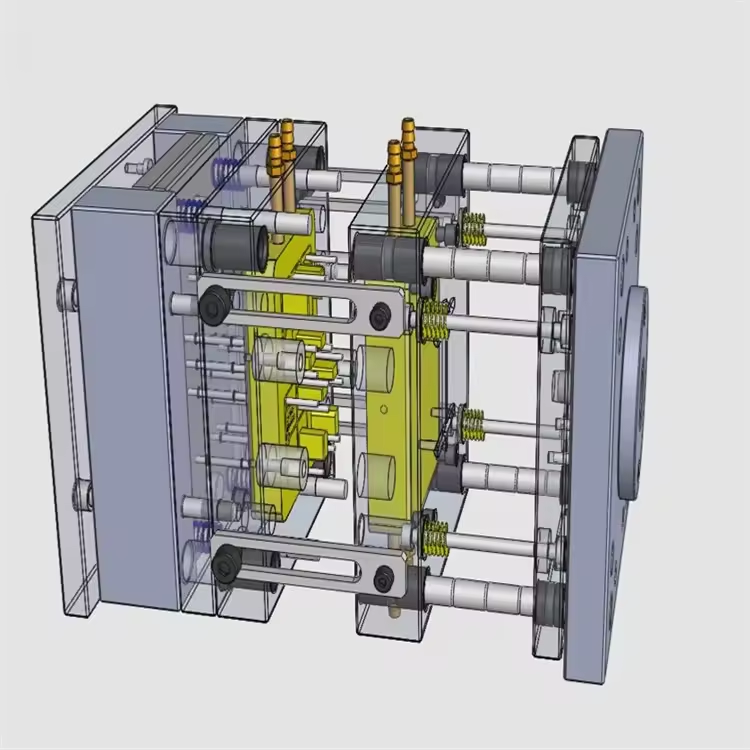
Instead of molding the plastic part and pressing the metal component in later, insert molding integrates the two materials during the injection molding process.
- The metal pin or threaded brass insert is placed directly into the empty mold cavity.
- The mold closes, and molten plastic is injected around the metal insert.
- As the plastic cools and shrinks, it permanently encapsulates the knurled or grooved features of the metal insert.
Advantages of Insert Molding over Press Fitting:
- Zero Hoop Stress: Because the plastic shrinks around the metal as it cools, there is no outward radial stress to crack the boss.
- Massive Pull-Out and Torque Resistance: The plastic flows into the grooves of the metal insert, creating an indestructible mechanical lock.
- Reduced Assembly Time: The part comes out of the injection molding machine fully assembled, eliminating a secondary manufacturing step.

Achieve Flawless Fits with BFY Mold
Whether your engineering relies on precise interference tolerances for a press fit, or requires the robust strength of insert molding, the success of your assembly depends entirely on the accuracy of your mold tooling.
At BFY Mold, we specialize in high-precision custom plastic injection molding:
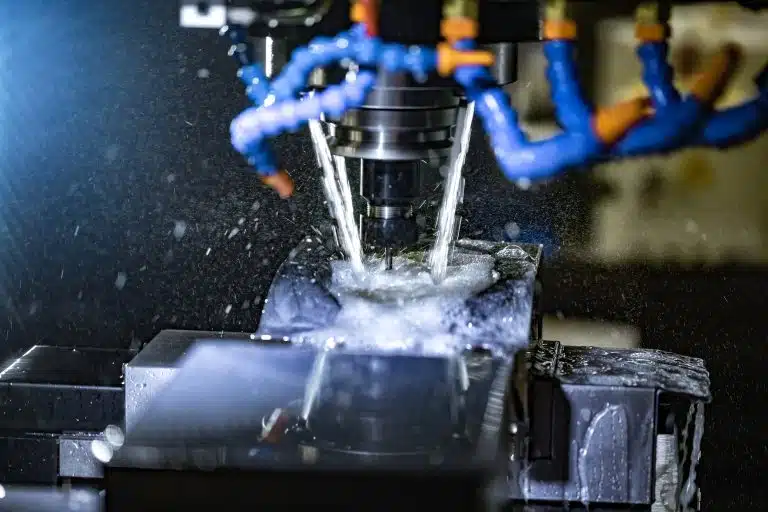
- Tight-Tolerance Tooling: Our in-house CNC and EDM machining centers ensure mold core and cavity dimensions are held to ±0.05mm, guaranteeing that your plastic press fit design assembles exactly as intended in CAD.
- Moldflow Analysis: Before cutting steel, our engineers simulate the plastic flow and shrinkage to predict exact hole dimensions, preventing costly tooling rework.
- Expert Insert Molding: With over 20 years of experience, we provide automated and semi-automated insert molding solutions for electronics, automotive, and industrial applications.
Frequently Asked Questions (FAQ)
Q1: How do you fix a loose press fit in a plastic part?
If a molded hole is too large, the best long-term solution is to perform a “steel-safe” modification to the injection mold (adding steel to the core pin to make the resulting plastic hole smaller). For a quick, low-volume fix, cyanoacrylate adhesives (super glue) or specialized retaining compounds can be used to bond the metal pin to the plastic.
Q2: Are press fits waterproof?
No. A plastic-to-metal press fit does not create an airtight or watertight seal. For waterproof applications, you must use an O-ring, ultrasonic welding, or an overmolding process.
Q3: Does glass-filled plastic change press fit guidelines?
Yes. Adding glass fibers (e.g., PA66+GF30) makes the plastic significantly stiffer and more brittle. You must reduce the amount of interference compared to the unfilled base resin to prevent the boss from fracturing.
Perfect Your Next Mechanical Design
Don’t let cracked plastic bosses or loose assemblies ruin your product launch. Trust the injection molding experts to optimize your design for manufacturing.
[Get a Free DFM Review Today] – Upload your CAD models, specify your mating components, and our engineering team will provide expert feedback and a tooling quote within 24 hours.