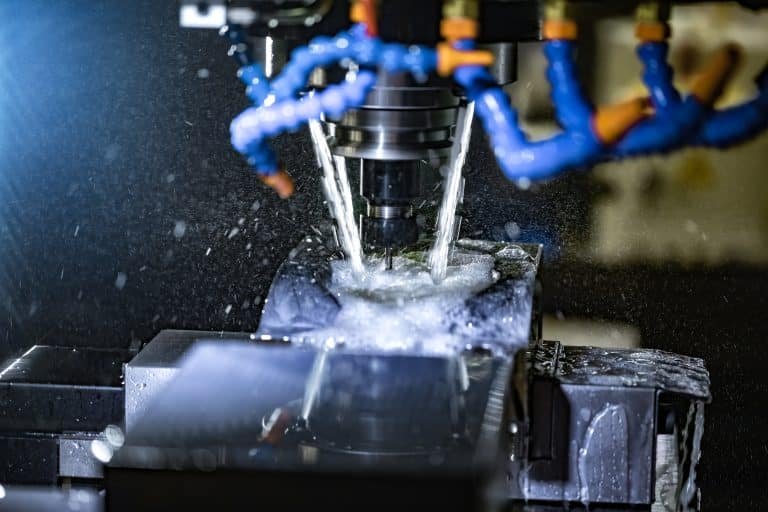
While Acrylonitrile Butadiene Styrene (ABS) is celebrated for its excellent impact resistance, machinability, and cosmetic finish, achieving a flawless production run is never guaranteed. ABS plastic injection molding requires precise thermodynamic control. A deviation of just a few degrees in melt temperature or a slight miscalculation in mold venting can quickly lead to thousands of dollars in scrapped parts.
For manufacturing engineers and quality control teams, identifying the root cause of a molding defect rapidly is critical to maintaining production efficiency.
In this advanced engineering troubleshooting guide, we will dissect the five most common defects encountered in ABS plastic injection molding, analyze their root causes on the factory floor, and provide actionable processing and DFM (Design for Manufacturing) fixes.
B2B Engineering Data: Quick Troubleshooting Matrix
| Defect Type | Primary Visual Symptom | Most Common Root Cause | Primary Processing Fix | Primary DFM / Tooling Fix |
| Splay (Silver Streaks) | Silvery, splash-like marks on the surface | Moisture in the ABS resin | Dry resin at 80°C for 2-4 hours | N/A (Material issue) |
| Warpage | Part is twisted or bowed after ejection | Uneven cooling or molded-in stress | Increase cooling time, adjust mold temps | Ensure uniform wall thickness |
| Burn Marks | Dark, charred spots at the end of fill | Trapped air igniting (Diesel Effect) | Decrease injection speed | Add or deepen mold vents |
| Weld Lines | Visible line where flow fronts meet | Flow fronts are too cold to fuse | Increase melt/mold temperature | Move gate location |
| Sink Marks | Depressions on the surface above thick areas | Shrinkage pulling the surface inward | Increase holding pressure and time | Core out thick sections |
1. Splay Marks (Silver Streaks)
The Problem: Splay appears as silvery, splash-like streaks spreading across the surface of the molded part, usually originating from the gate.
The Root Cause: ABS plastic is a highly hygroscopic material, meaning it absorbs moisture from the ambient air. If the plastic pellets are not thoroughly dried before entering the injection barrel, the trapped water instantly boils into steam under high heat. This steam is injected into the mold alongside the plastic, bursting against the mold walls and creating silver streaks. It also degrades the polymer chains, severely reducing the part’s impact strength.
The Fix:
- Processing: You must utilize a desiccant dryer. Dry the ABS resin at 80°C to 90°C (176°F to 194°F) for 2 to 4 hours immediately before molding. Check the dew point of your dryer to ensure it is functioning correctly.
2. Warpage (Dimensional Distortion)
The Problem: The ABS part comes out of the mold looking fine, but as it cools on the conveyor belt, it bows, twists, or bends out of its designed dimensional tolerances.
The Root Cause: Warpage is caused by differential shrinkage. If one side of the part cools and shrinks faster than the other, it creates internal stress that literally pulls the part out of shape. This is usually caused by uneven mold temperatures or poor part design (mixing very thick and very thin walls).
The Fix:
- DFM (Design for Manufacturing): The golden rule of plastic design is uniform wall thickness. If you must transition from a thick wall to a thin wall, make the transition gradual (chamfered) rather than an abrupt 90-degree step.
- Tooling: Ensure the mold’s cooling channels are properly designed to cool the core and cavity at the same rate.
- Processing: Increase the cooling time before ejection, allowing the ABS to solidify completely while still constrained by the rigid steel mold.

3. Burn Marks (The Diesel Effect)
The Problem: Small, dark brown or black charred spots appear on the edges of the part, typically at the furthest points from the injection gate or at the end of blind pockets.
The Root Cause: When molten ABS is injected into the closed mold cavity at high speed, it pushes the ambient air ahead of it. If that air cannot escape through the mold vents quickly enough, it becomes highly compressed. According to the principles of thermodynamics, rapidly compressing gas generates extreme heat—enough to literally ignite the trapped air and scorch the plastic. This is known as the “Diesel Effect.”
The Fix:
- Processing: Slightly reduce the injection speed at the final stage of the fill (profiled injection). This gives the trapped air more time to escape.
- Tooling: Check the mold vents. They may be clogged with plastic residue or outgassing deposits. If the mold is clean but burn marks persist, the toolmaker must grind deeper or wider vents at the end-of-fill locations (usually 0.02mm to 0.03mm deep for ABS).
4. Weld Lines (Knit Lines)
The Problem: A visible line or crack appears where two separate flow fronts of molten plastic meet. For example, when plastic flows around a core pin (creating a hole) and meets on the other side.
The Root Cause: Weld lines are structurally the weakest point of any molded part. If the molten ABS is too cold or flowing too slowly when the two fronts meet, the polymer chains will not intermingle and fuse properly.
The Fix:
- Processing: Increase the melt temperature (do not exceed 270°C for standard ABS to avoid thermal degradation) and increase the mold temperature (up to 80°C). Increasing injection speed also helps the fronts meet while they are still hot.
- Tooling/DFM: If the weld line is in a high-stress area, the tooling engineer must move the injection gate location to force the weld line to form in a thicker, non-critical area of the part.
5. Sink Marks
The Problem: Shallow depressions or dimples appear on the cosmetic surface of the part, usually directly above thick structural features like ribs, bosses, or internal walls.
The Root Cause: As molten ABS cools, it shrinks (typically 0.4% to 0.8%). Thicker sections hold more heat and take longer to cool than the thinner outer walls. As the thick center finally cools and shrinks, it pulls the already-solidified outer surface inward, creating a visible sink mark.
The Fix:
- DFM: Never design a supporting rib to be the same thickness as the main wall. The base thickness of a rib should be no more than 50% to 60% of the adjoining wall thickness.
- Processing: Increase the holding pressure and holding time. This forces more molten plastic into the cavity to compensate for the volumetric shrinkage as the part cools.
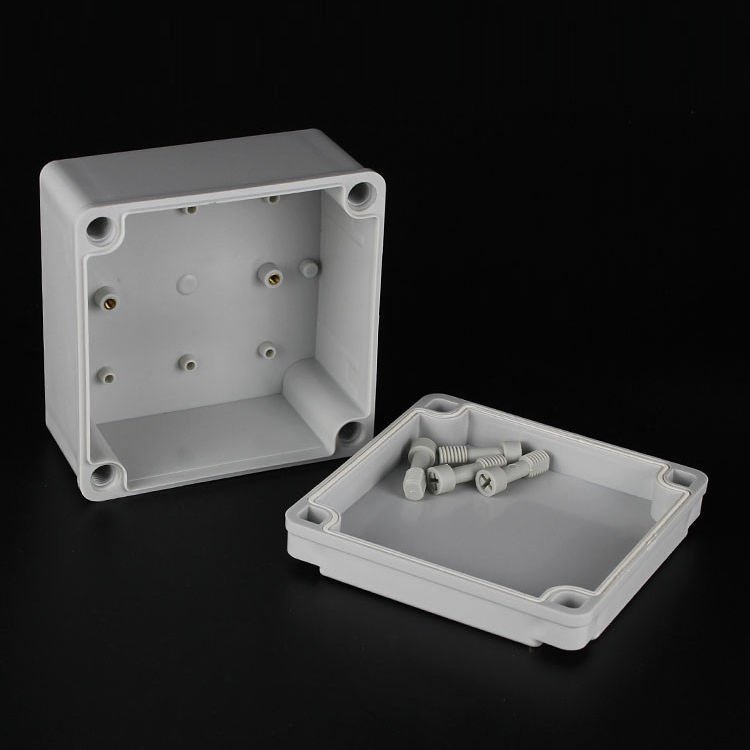
Achieve Zero-Defect Manufacturing with BFY Mold
Troubleshooting ABS plastic injection molding defects requires a deep understanding of thermodynamics, polymer science, and mold tooling.
At BFY Mold, we don’t just react to defects; we engineer them out before they happen. With over 20 years of experience, we employ a rigorous scientific molding approach:
- Predictive Moldflow Analysis: Before we cut steel, our engineering team simulates the injection process to identify potential weld lines, air traps, and warpage, optimizing gate locations and cooling channels.
- High-Precision Tooling: We machine our molds in-house holding tolerances to ±0.05mm, ensuring perfect venting and precise wall thicknesses.
- Strict Process Control: Our ISO-certified facilities utilize centralized desiccant drying systems and highly calibrated injection machines to guarantee every batch of ABS is processed flawlessly.
Stop paying for scrapped parts and delayed production schedules.
[Contact BFY Mold Today] – Send us your CAD files for a comprehensive, free DFM review. Our engineers will optimize your design for manufacturing and provide a transparent tooling quote within 24 hours.